When it comes to holding up a mirror for society, few genres do it better than the crime genre. Viewers don’t watch these shows just for the “whodunnit” factor, but crime dramas are so fascinating because of the many things it explores, from the complexity of the justice system to the darkness of human society, where the thin line between the heroes (the cops and prosecutors) and the villains (the criminals) are often blurred, requiring the viewer’s full attention.
While it may seem like television is crowded with crime procedurals, there are a few that did a lot more than just pull in sky-high ratings. The following shows shattered the conventions of the typical crime drama, and rebuilt the genre in their own image. Whether it’s introducing flawed cops who push the boundaries to solve cases, or season-long slow burns that lead to a shocking conclusion, these crime dramas dared to push the envelope, and were successful at doing it. So, without further ado, here are the most important crime dramas that defined the genre.
Before Hill Street Blues premiered on NBC in 1981, crime dramas followed the tried-and-true staple of “case-of-the-week,” which involves a different case every week. However, Steven Bochco and Michael Kozoll, the creators of Hill Street Blues, wanted to do something different with their crime procedural. Instead of focusing on a different case every week, the series, which follows the day-to-day lives of cops at a police station on Hill Street, focused more on serialized storytelling involving complex characters.
This allowed Hill Street Blues to embark on storylines that stretched across multiple episodes, which introduced a new way to tell crime stories. Of course, this wouldn’t have worked if it wasn’t for the complicated characters and gritty nature that defined the show. Before the show premiered, crime dramas often indulged in the “Hollywood way” of police work, with the cops clearly the good guys and the criminals the bad guys, with the cops always coming out on top. But, with Hill Street Blues, Bochco and Kozoll, along with the show’s writers, opted for a more realistic portrayal of police work, with characters that didn’t fit into tidy narratives. This gave the show more of a documentary feel, and it made the viewers feel like they were inside a working police department. The series was groundbreaking, and it paved the way for more serious crime dramas that would take what Hill Street Blues created and make it their own.
One would be hard-pressed to find a more realistic cop show like NYPD Blue. While Hill Street Blues stripped away the Hollywood veneer of police work,* NYPD Blue*, created by Steven Bochco and David Milch, stripped the mold down to its core, showing, in graphic detail, the realistic nature of a police precinct. The series completely redefined the gritty television series, with its storylines pushing the boundaries of what audiences would accept on network television.
NYPD Blue was groundbreaking in unclutching the pearls of network TV. The characters cursed a lot, and the series even showed brief nudity, which was basically a sin for network television at the time. It made the series feel more “adult,” and it certainly wasn’t for the entire family. NYPD Blue paved the way for the “anti-hero,” a trope that would be used in future crime dramas like ***The Shield ***(which is basically a spiritual successor of NYPD Blue) and Breaking Bad. Here, the cops portrayed aren’t always faithful to the oath they take when becoming a police officer, and the series taught viewers how to love a character even when they have glaring flaws. If it wasn’t for *NYPD Blue *improving on the template set by Hill Street Blues, modern crime dramas would almost certainly look a lot different than we see them now.
In 1991, Anthony Hopkins made movie audiences feel uneasy thanks to his portrayal of the cannibalistic serial killer Hannibal Lector in the classic film Silence of the Lambs. It wouldn’t be long until the character would be adapted as a TV series, and that came in 2013 with the NBC crime drama Hannibal. Created by Byran Fuller and adapted from** Thomas Harris**’ novel Red Dragon, Hannibal is a series that wound up transcending the standard crime procedural, using tropes that often weren’t seen in the genre.
The series was more than a traditional drama, as it exploited themes such as morality and manipulation within its storyline. Thus, *Hannibal *went beyond the stated goal of just solving crimes, and used disturbing, yet beautiful photography to move the needle of its plot. Hannibal also introduced the “dark romance” dynamic to crime dramas. Granted, the romance within *Hannibal *is a bit twisted, as it finds the serial killer and the FBI investigator hunting them engaging in a profound understanding of one another. It certainly twisted the conventional wisdom typically found in crime drama, and it gave the genre a new angle in which to tell truly dark stories.
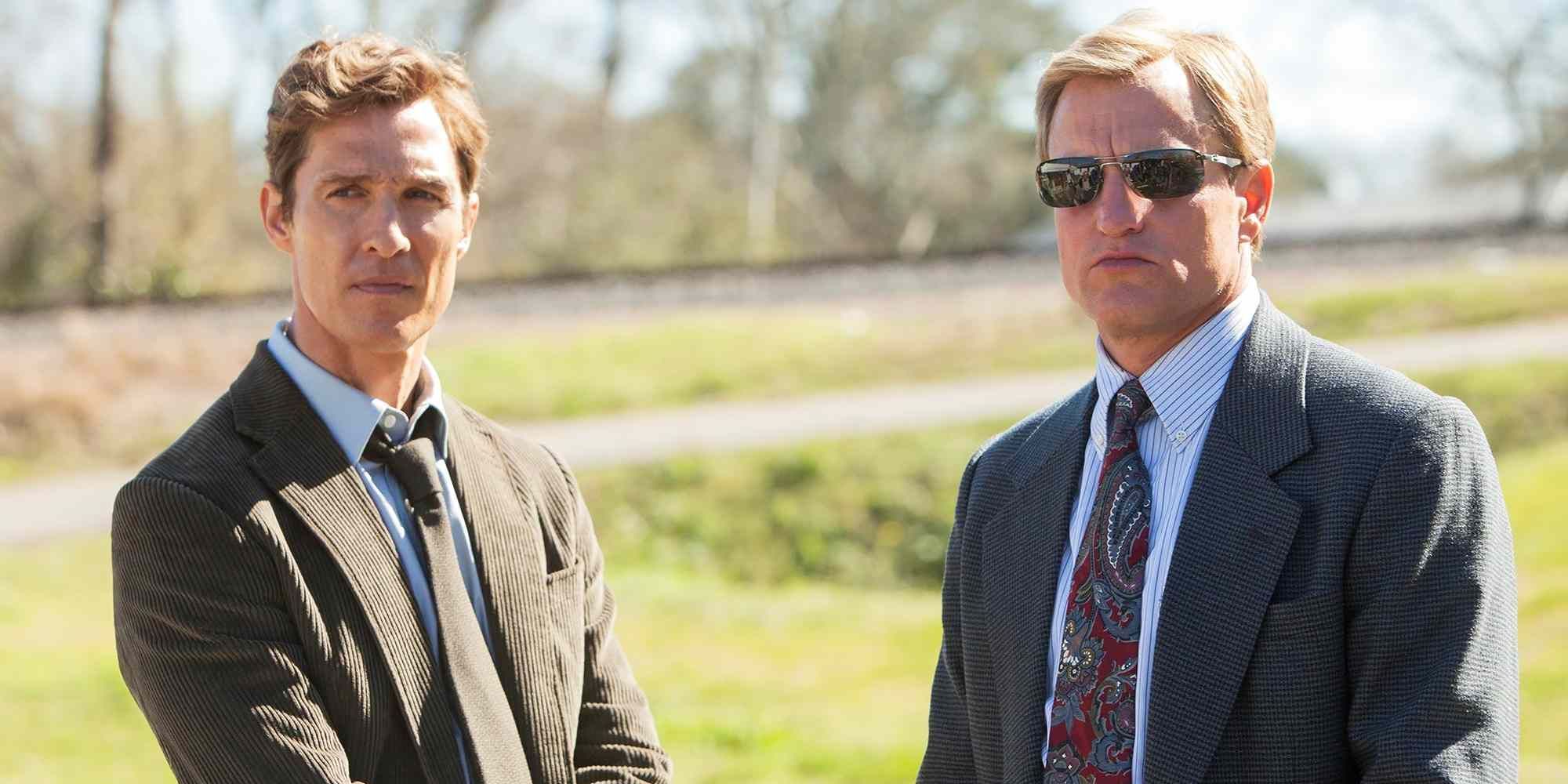
Anthologies are not normally associated with crime dramas, but in 2014, that changed with the premiere of HBO’s True Detective. Instead of using the basic templates that most crime dramas live and die by, True Detective, created by Nic Pizzolatto, went the opposite direction, merging criminal investigations with philosophical depth, which was possible thanks to the decision to make it an anthology series.
With a different case driving each season, True Detective basically reinvented itself with each season, which kept the series from becoming stagnant, like most crime dramas tend to become. Then there’s the structure of the series, which uses atmospheric storytelling to create tension within each season. Few crime dramas use their setting in such an impactful way as* True Detective* does, such as the haunting atmosphere of the Louisiana coast in Season 1, or the dark, snowy cold of Alaska in Season 4. Using the setting to heighten the tension of the series was truly revolutionary. This stirring crime drama proves the genre can thrive in an anthology format, and it changed the way that crime shows were made and produced.
The show that claimed the most of your answers is the world you were built for. If two tied, both are shown — you’re complicated enough to straddle two Sheridan universes.
You are a Dutton — or you might as well be. You understand that some things are worth protecting at any cost, and that the modern world’s indifference to history, to land, to legacy, is not something you’re willing to accept quietly. You lead from the front, you carry your family’s weight without complaint, and when someone threatens what’s yours, you don’t escalate — you finish it. You’re not cruel. But you are absolute. In Yellowstone’s world, that combination of ferocity and loyalty doesn’t make you a villain. It makes you the only thing standing between everything that matters and everyone who wants to take it.
You thrive in the chaos of high-stakes negotiation, where the money is enormous, the margins are thin, and the wrong word in the wrong room can cost everyone everything. You’re a fixer — the person called when a situation is already on fire and needs someone with the nerve to walk into it. West Texas oil country rewards exactly what you are: sharp, adaptable, unsentimental, and absolutely clear-eyed about what people want and what they’ll do to get it. You’re not naive enough to think this world is fair. You’re smart enough to be the one deciding who it’s fair to.
You are a Dwight Manfredi — someone who has served their time, paid their dues, and arrived somewhere unexpected with nothing but their reputation and their wits. You adapt without losing yourself. You build loyalty through respect rather than fear, though you’re not above reminding people that the two aren’t mutually exclusive. Tulsa King is for people who are still standing when everyone assumed they’d be finished — who find, in an unfamiliar place, that they’re more capable than the world gave them credit for. You don’t need a throne. You build one, wherever you happen to land.
You carry the weight of a system that is broken by design, and you do it anyway — because someone has to, and because you’re the only one positioned to do it without the whole thing collapsing. Mike McLusky’s world is for people who are comfortable operating where there are no good options, only less catastrophic ones. You speak every language: law enforcement, criminal, political, human. That fluency makes you invaluable and it makes you a target. You’ve made your peace with both. Mayor of Kingstown belongs to people who understand that keeping the peace is not the same as being at peace — and who do the job regardless.
While we’ve spoken about the rise of the “anti-hero” and its role in reshaping the crime drama genre, no show has had such an important impact on the trope quite like Tony Soprano (James Gandolfini), the man in which the iconic HBO series, The Sopranos, revolved around. Before the series premiered in 1999, mob bosses like Tony would have been written as an unlikable bad guy who is clearly someone the audience wouldn’t root for. But series creator** David Chase **did something different with Tony, as, instead of writing him as a one-dimensional mobster, he humanized him, giving the audience a look at how being a capo, while also dealing with family issues, was taking a toll on him.
By seeing Tony going to a therapist to open up about the anxiety his duality of being a suburban dad and a brutal crime boss was taking on him, we empathized with him instead of quickly casting him aside as a criminal. This gave The Sopranos a psychological depth that was rarely seen in crime dramas before the show premiered. By showing a crime capo as an actual human instead of a monster, The Sopranos basically undid what The Godfather movie series did, de-glamorizing the mafia by showing the mundane and absurdity of mob life. This wasn’t just a great crime drama, it was an important one that proved that complex, violent dramas had a place on television.
In 1990, legendary series creator Dick Wolf gave the crime drama world Law & Order, which redefined the traditional crime procedural by not only showing the cops busting the bad guys, but also how cases are prosecuted in the court of law. The series was an instant success, and nine years later, Wolf would create a spin-off to the legendary series,*** Law & Order: Special Victims Unit***, which took things a step further by following a team of detectives who investigate sex-based crimes, led by Olivia Benson (Mariska Hargitay), who began the series as a detective and is now the unit’s captain.
SVU not only exceeded expectations, but has since grown to become a far more important crime drama than its parent series. While the original *Law & Order *followed the crime drama tropes by-the-book, **SVU tackles more sensitive topics that are often overlooked by more traditional crime dramas, given its focus on sex crimes and violence against the more vulnerable individuals in society. By centering the show’s storylines around the survivor’s experience, SVU was, and continues to be, groundbreaking in offering a more compassionate understanding of the trauma that crime victims go through, instead of just seeing these victims as vehicles for entertainment. SVU has become a cultural phenomenon and has had a real world influence in advocating for victims of sex crimes and abuse.
As mentioned earlier, the humanization of The Sopranos’ lead character and the complexity of crime helped pave the way for a crime drama that wasn’t seen before, and, in all honesty, hasn’t been seen since. We’re talking, of course, about The Wire, one of the most important crime dramas ever produced. Created by **David Simon **and Ed Burns, The Wire isn’t so much a fictional crime procedural, but more like a documentary into the realism of how the drug trade, and the failed policies of fighting the war on drugs, actually hurt the city of Baltimore and perpetuate systemic injustice.
The Wire is definitely not a “pro cop” series like its more traditional contemporaries, as the series thrives on its moral complexity. Instead of framing its characters as simply “good or evil,” the show paints a dour, vivid picture of how the environment the characters operate in shape, break, and destroy individuals; whether it’s watching how drug kingpin Stringer Bell (Idris Elba) tries desperately to be seen as a “legitimate” businessman, or how Detective Jimmy McNulty’s (Dominic West) quest to do “real police work” is actually his downfall, the characters on The Wire are hard to root for, and against, which is the beauty of this hallmark series. While the other shows within this piece are certainly important to the crime drama genre, none has had more of an impact on how crime stories are told today than this iconic series.
](/tag/the-wire/)
2002 - 2008-00-00
Ernest R. Dickerson, Ed Bianchi, Steve Shill, Clark Johnson, Daniel Attias, Agnieszka Holland, Tim Van Patten, Alex Zakrzewski, Anthony Hemingway, Brad Anderson, Clement Virgo, Elodie Keene, Peter Medak, Rob Bailey, Seith Mann, Christine Moore, David Platt, Dominic West, Gloria Muzio, Jim McKay, Leslie Libman, Milcho Manchevski, Robert F. Colesberry, Thomas J. Wright