He has covered everything from Marvel to the Oscars, and Marvel at the Oscars. He also writes obsessively about the box office, charting the many hits and misses that are released weekly, and how their commercial performance shapes public perception. In his time at Collider, he has also helped drive diversity by writing stories about the multiple Indian film industries, with a goal of introducing audiences to a whole new world of cinema.
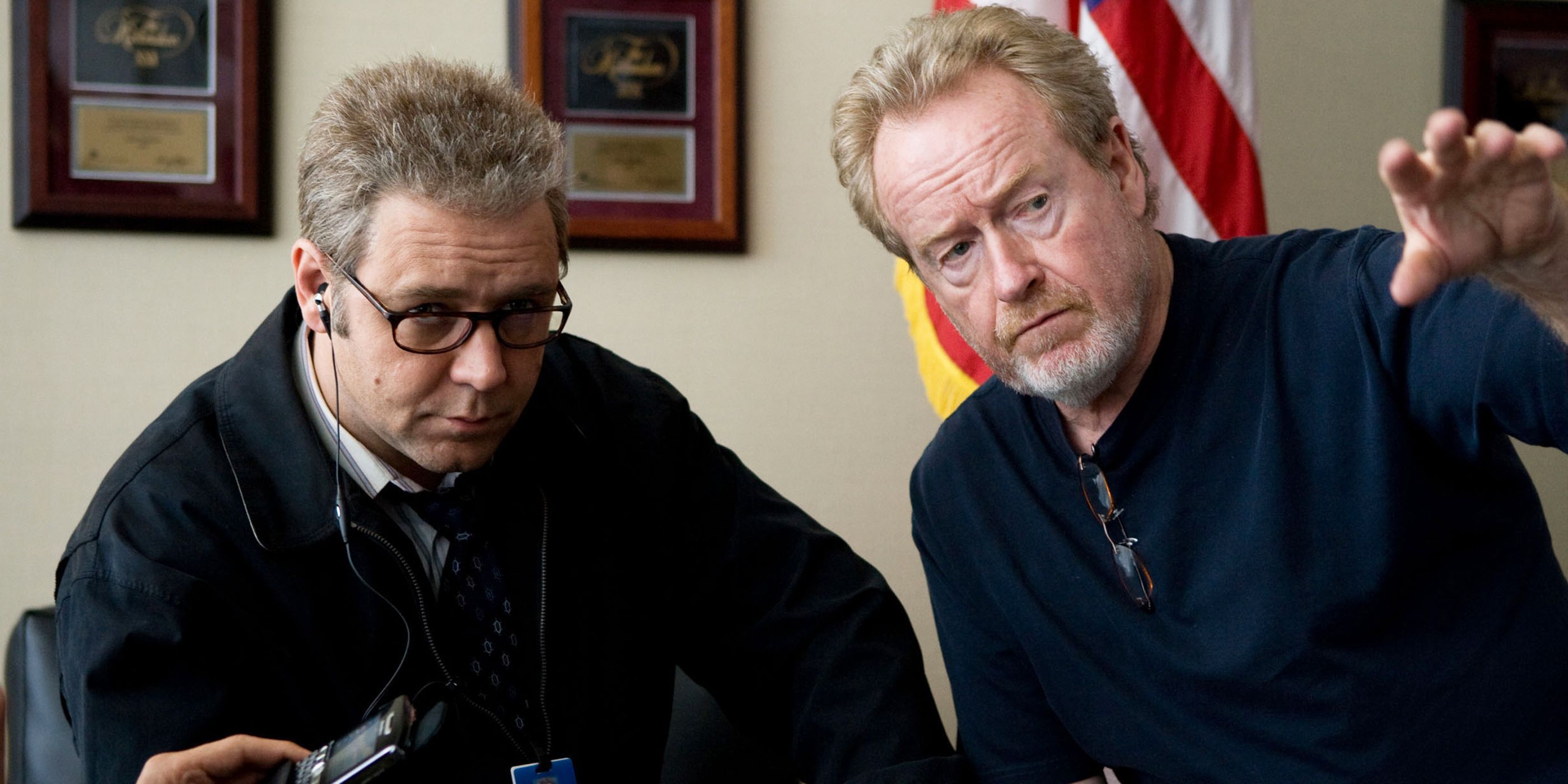
Star Russell Crowe won a Best Actor Oscar for his performance in director Ridley Scott’s Gladiator, and there was no looking back. Together, they worked on a string of diverse movies over the next decade before abruptly parting ways. They haven’t worked together since the 2010 epic Robin Hood, their most high-profile project since Gladiator. While none of their subsequent movies attained the heights of Gladiator, many of them were hits. Among their best-reviewed movies together is American Gangster, which was released in 2007. However, in recent years, they’ve made comments about each other that have raised questions about whether they’re on good terms.
The issue seems to revolve around Gladiator II, a project that was decades in the making before being released in 2024. Notably, Crowe wasn’t involved. It’s true that his character died at the end of the first film, which was released in the year 2000, but there was talk of an ambitious follow-up that could’ve featured the character in the afterlife. That version of the movie didn’t take off, and the studio instead decided to make a more conventional follow-up with **Paul Mescal **as the protagonist, who is revealed to be the illegitimate son of Crowe’s character. Gladiator II did roughly the same business as the first movie, but it cost three times as much. It ended its run with about $465 million worldwide against a reported budget of around $300 million. According to FlixPatrol, the **movie returned to the global Paramount+ viewership chart **recently, after having spent months at the number one spot following its debut.
Your answers have pointed to one Oscar Best Picture winner above all others. This is the film that was made for the way your mind works.
You are drawn to films that operate on multiple levels simultaneously — that begin in one genre and quietly, brilliantly migrate into another. Bong Joon-ho’s Parasite is a film about class, desire, and the architecture of inequality that manages to be darkly funny, deeply suspenseful, and genuinely shocking across a single extraordinary running time. Your instinct is for cinema that hides its true intentions until the moment it’s ready to reveal them. Parasite is exactly that — a film that rewards close attention and punishes assumptions, right up to its devastating final image.
You want it all — and this film gives you all of it. The Daniels’ Everything Everywhere All at Once is one of the most maximalist films ever made: action comedy, multiverse sci-fi, family drama, existential crisis, and a genuinely earned emotional core that sneaks up on you amid the chaos. You are someone who responds to ambition, who doesn’t want cinema to choose between being entertaining and being meaningful. This film refuses that choice entirely. It is overwhelming by design, and its overwhelming nature is precisely the point — because the feeling of being crushed by infinite possibility is exactly what it’s about.
You are drawn to cinema on a grand scale — films that understand history not as a backdrop but as a force, and that place their characters inside that force and watch what happens. Christopher Nolan’s Oppenheimer is a film about the terrifying gap between what we can do and what we should do, told with the full weight of one of the most consequential moments in human history behind it. You want your films to feel important without feeling self-important — to earn their ambition through sheer craft and the gravity of their subject. Oppenheimer does exactly that. It is enormous, complicated, and refuses easy comfort.
You are drawn to films that foreground their own construction — that make the how of the filmmaking part of the what it’s about. Alejandro González Iñárritu’s Birdman, shot to appear as a single continuous take, is cinema examining itself through the cracked mirror of a fading actor’s ego. You respond to formal daring, to the feeling that a film is doing something that probably shouldn’t be possible. Michael Keaton’s performance and Emmanuel Lubezki’s restless camera create something genuinely unlike anything else — a film that is simultaneously about creativity, relevance, self-destruction, and the impossibility of ever truly knowing if your work means anything at all.
You are drawn to cinema that trusts silence, that refuses to explain itself, and that treats dread as a form of meaning. The Coen Brothers’ No Country for Old Men is a film about the arrival of a new kind of evil — implacable, arbitrary, and utterly indifferent to the moral frameworks we use to make sense of the world. It is one of the most formally controlled films ever made, and its controlled restraint is what makes it so terrifying. You want your films to haunt you, not comfort you. You are not interested in resolution if resolution would be dishonest. No Country for Old Men is honest in a way that most cinema never dares to be.
The movie received mostly positive reviews, but Crowe wasn’t a fan. He told Australia’s Triple J last year, “I think the recent sequel that, you know, we don’t have to name out loud, is a really unfortunate example of even the people in that engine room not actually understanding what made the first one special. It wasn’t the pomp. It wasn’t the circumstance. It wasn’t the action.** It was the moral core.**” Before the film’s release, Crowe made it clear that he didn’t want to be asked about it as he wasn’t involved, but he expressed his apprehension about the direction the sequel was taking creatively. Scott didn’t mince words either, making reference to Crowe’s comments in an interview with Empire magazine ahead of Gladiator II’s release. “I think he’s still one of the best actors in the world, and I think we have a good relationship. I hope we do. As long as he doesn’t start bitching about how he wasn’t consulted. Why would I? He’s dead!” he said. Stay tuned to Collider for more updates.
](/tag/gladiator-2/)
](/tag/action/)
](/tag/history/)
](/tag/adventure/)
David Scarpa, Peter Craig, David Franzoni