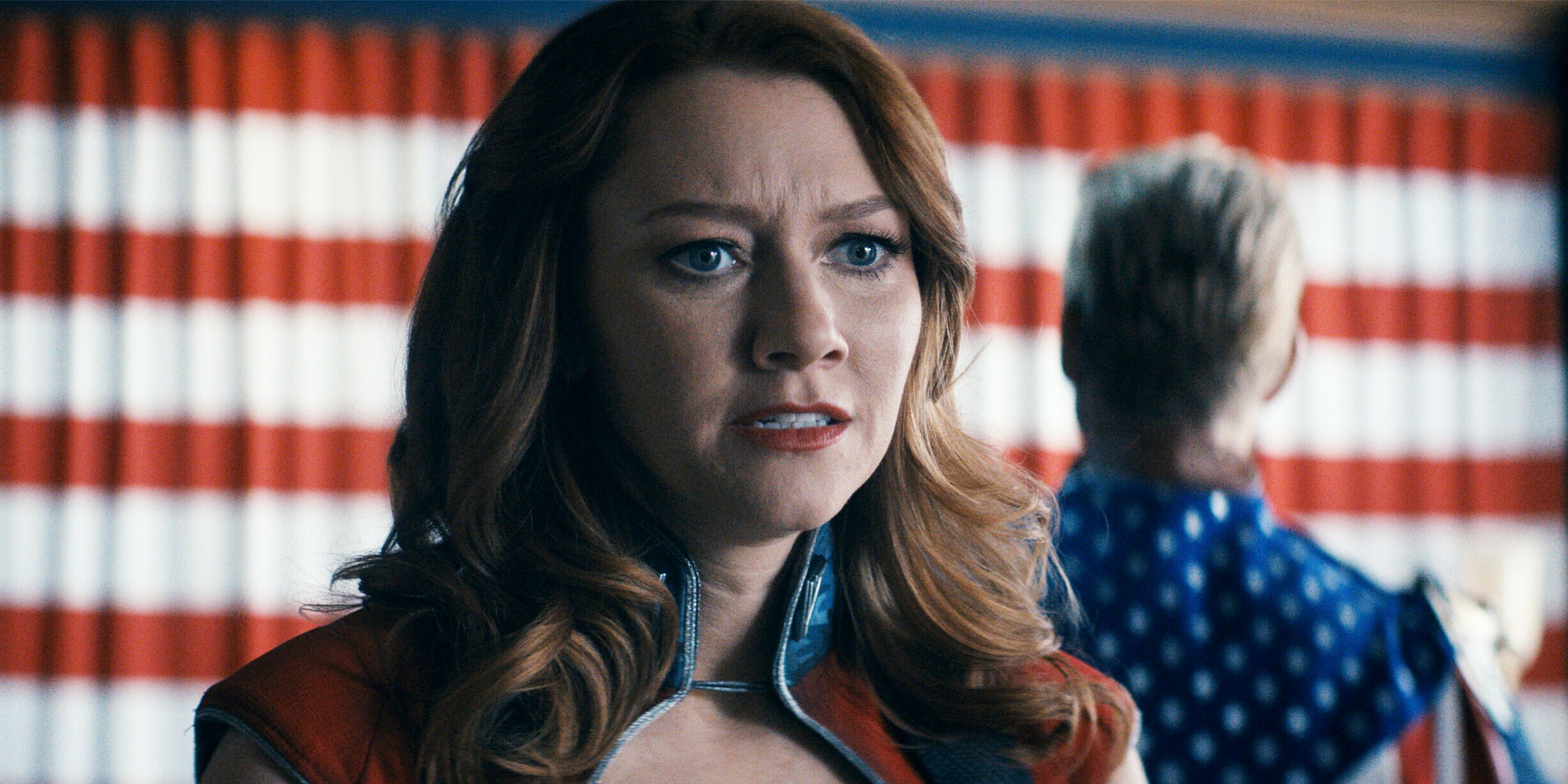
[Editor’s Note: The following contains spoilers for The Boys, Season 5, Episode 5, “One-Shots.”]Between Homelander’s (Antony Starr) wildly impulsive behavior and the frequent extreme violence across the board in The Boys, we were bound to lose a number of key characters in the show’s final season. Season 5 kicked off with an especially surprising one, forcing fans to say goodbye to someone who’s been part of the Prime Video series since day one, Jessie T. Usher as A-Train. Now, Season 5, Episode 5, “One-Shots,” removes yet another major character from the equation. At the end of the episode, Homelander kills Valorie Curry’s Firecracker.
With her run on The Boys wrapping up in spectacular fashion, with quite a few exceptional performance beats, Curry took the time to swing by the **Collider Ladies Night **studio for an in-depth interview about her journey to The Boys, and her experience digging into the “sad, racist, homophobic piece of shit” that is Firecracker. In addition to discussing Homelander’s declaration that he is God and how that changes everything for her, we also talked about the only moment we get a peek at Misty Tucker Gray at the beginning of Episode 5, and, of course, her demise at the hands of Homelander.
After five seasons of storytelling, it’s undeniable that every single character in The Boys should be on high alert when in the presence of Homelander. He can take a life at the drop of a hat, with or without reason. However, at the end of Episode 5, Firecracker does not suspect her time at Vought might be up — or that her life is about to come to an end, for that matter.
In her previous scene, yes, there’s reluctance, but Firecracker does ultimately lie during a Truth Bomb broadcast. She accuses her Pastor (W. Earl Brown) of things that she knows are blatantly false in favor of convincing Americans that they deserve Homelander and the Democratic Church of America. Curry explained that when she returns to her apartment and finds Homelander waiting for her, “She’s just done the thing that he wants. She has given up whatever humanity she had left, whatever love existed for her in the world is now gone, and there he is. She has no idea that it’s coming.”
Curry continued, “The ironic thing is, he just fires her at first. She could have left that room.” However, she stays because not only does she sincerely believe that Homelander won’t hurt her, but she’s furious about how things have unfolded. Here’s how Curry put it:
“One of the things that I’ve always found to be true about Firecracker is, at first, because she actually thinks he’s good and she loves him, she’s not afraid of him. She is so bold in her overtures in season one because she’s not afraid, because why would he hurt her? And then there’s a moment, and I don’t know how it ends up playing, but he fires her, he walks away. *She’s *the one, *she *follows him because she’s fucking angry. At this point, she’s lost so much that she loses any sense of control. And also, I think it’s a good argument!”
It is a good argument! While it certainly isn’t a commendable truth, Firecracker does speak the truth when she pleads with Homelander. “All he wants is love, and she is the *only *person who can genuinely offer that.” Curry continued:
“I’m not even talking about romantic love, I’m just talking about a kind of intimacy. I don’t think she has any aspiration to love Homelander in that way. There was a moment before where he starts to touch my face, and even I’m like, ‘Oh my God, is he gonna kiss me?’ I can’t speak for Antony, but I felt like this is what I saw in his eyes is, that vulnerability *he *felt in that moment is why he has to do it. And I mean, there are a lot of reasons. I think it’s an impulse for him, but her ability to get under his skin is intolerable.”
While digging further into Homelander’s impulsive choice to kill Firecracker, we zeroed in on one particular part of their conversation. A teary Firecracker concludes her pitch to Homelander by saying, “I love you. We all need love, don’t we?” The scales appear to be tipping in her favor, but after a brief pause, she adds, “Even God,” and then the music cuts and any sense of softness vanishes from Homeland’s face. Here’s what Curry said when asked if those two words were the game changer. Had she not added them, could she have survived the conversation?
“What I’m thinking about is, I think it was written differently. Oh my god, I’d have to look at my watermarked scripts! But I think it might have been something like, ‘We all need love, don’t we? Even you.’ It was slightly different, and I remember that was one of the things that I wanted to do, a version of saying, ‘Even God,’ which that tracks for her theologically. But I don’t know. Maybe. It is a question for Antony. Maybe that is her overstepping just too much, even though I think in that moment it felt like the exactly true and right thing. And also, naming that need has been something powerful for her, being able to see what he needs as a human.”
Curry reemphasized, “Maybe she overplays her hand, and also maybe he can tell that I’m laying it on a little thick.” She also offered some insight into her conversation with Starr about the moment. “When we talked about it, he talked about it not being motivated by any particular reason. It was the impulse.” Curry also added, “And also part of it might have been that I still smelled like his dad.”
Looking for even more from Curry on her experience playing Firecracker in The Boys and her journey in film and television thus far, including working on Veronica Mars, The Following, Detroit: Become Human, and loads more? Be sure to watch her full Collider Ladies Night interview in the video at the top of this article!
](/tag/action/)
2019 - 2026-00-00
Erin Moriarty, Karen Fukuhara, Karl Urban, Jack Quaid, Eric Kripke
The Boys is a drama series that explores the darker aspects of superhero culture, portraying a world where superheroes abuse their powers rather than use them for good. Centered around a vigilante group aiming to control these corrupt heroes, the series delves into themes of power, corruption, and accountability. The show features a complex narrative with multifaceted characters, offering an unfiltered look at the consequences of unchecked power.