Every creature in Pokémon has its share of fans, but there’s no denying that the most popular of them all is Pikachu. While Pikachu was originally just one of many Pokémon, with even ones like Poliwhirl or Clefairy set up to be the stars, fans quickly took to Pikachu because of its adorable design, and after getting the starring role in the Pokémon anime, it wasn’t long before Pikachu became the definitive mascot of the franchise and one of the most popular anime characters of all time.
There’s no Pokémon more popular than Pikachu, and sure enough, every game since the original has done something to capitalize on that. Sometimes it’s from giving Pikachu special moves or outfits, exclusive merchandise, and even its own games, but more often than not, it comes from Pokémon introducing new characters that mimic Pikachu’s appeal as a cute little rodent. There have been a good number of these “Pikachu clones” introduced over the past 30 years, and while some have been forgettable, others have become almost as iconic as Pikachu itself.
Unlike most Pokémon games, the Gen 3 Pokémon games, Ruby, Sapphire, & Emerald, introduced two Pikachu clones, Plusle and Minun. As their names would imply, Plusle and Minun are meant to fight as a pair in double battles, which were first introduced in Gen 3, and despite some minor differences in stats and moves, they’re functionally the same Pokémon.
It’s one thing for Plusle and Minun to be derivatives of Pikachu, with the two of them even looking like recolored Pichus, but the fact that they’re even derivatives of each other makes it even harder to feel attached to them. Plusle and Minun essentially have nothing going for them beyond teaching people about double battles, and that’s why they’re the least interesting Pikachu clones by far.
The Gen 2 Pokémon games, Gold, Silver, & Crystal, introduced the concepts of breeding and baby Pokémon, and sure enough, Pikachu got one in the form of Pichu. As a baby, Pichu’s main gimmick is that it doesn’t have as much control over its electricity as Pikachu and often hurts itself in battle, although that isn’t seen in the games outside of recoil moves.
As the original Pikachu clone and baby Pokémon, Pichu is plenty iconic in its own right, and not only does it have its fair share of merchandise and alternate forms, but it even got to be one of the few Pokémon to feature in Super Smash Bros. That being said, it’s probably the Pokémon most deliberately designed to be derivative of Pikachu, and because of that, it largely fails to stand out on its own.
The first Pikachu clone introduced in the Gen 7 Pokémon games, Sun & Moon, is Togedemaru, an Electric/Steel-type that resembles a chubby hedgehog more than a mouse. Togedemaru’s appearance certainly makes it more unique than other Pikachu clones, but at the same time, it’s so far removed from their design philosophy that it ends up looking weird.
Togedemaru isn’t the best Pikachu clone, but because of its unique appearance and especially unique typing, it has a lot more going for it than its contemporaries often do. It even got starring roles in the *Pokémon Sun and Moon *anime as Sophocles’ partner and Pokémon Ultra Sun & Ultra Moon as a Totem Pokémon, so suffice to say, there’s definitely something appealing about it.
Dedenne is the Pikachu clone of the Gen 6 Pokémon games, X & Y, and also one of the first members of the brand-new Fairy type. That alone gives Dedenne a lot of uniqueness, and over a decade later, it’s still the only Electric/Fairy-type Pokémon, and that adds a lot to its appeal, even if it isn’t that useful in battle.
Even more special, though, is Dedenne’s design; not only does it have a uniquely orange color scheme, but its chubby design also works as a callback to Pikachu’s original design, as well. Dedenne surprisingly has a lot going for it, and because of that, it’s easily one of the better Pikachu clones in Pokémon.
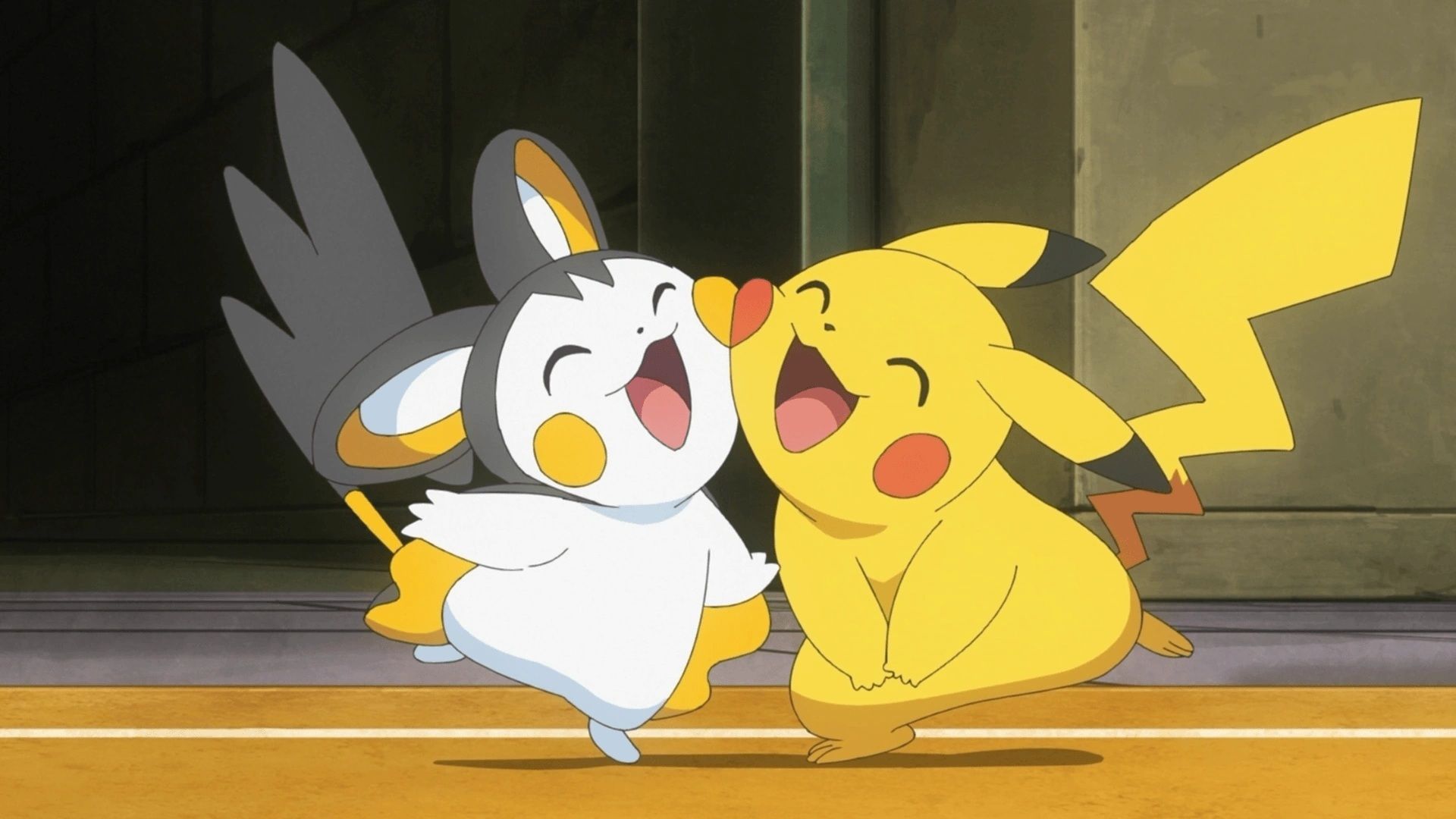
For the first four generations of Pokémon, Pikachu clones didn’t differ much from the original, but that changed with Pokémon Black & White and Emolga. While its predecessors were all confined to the ground, Emolga was an Electric/Flying-type based on a flying squirrel, and when combined with its adorable design, it immediately stood out in the best of ways.
Emolga’s success as a Pikachu clone even affected how the group would be portrayed going forward; every Pikachu clone before then was only of a single type, but following Emolga’s success as a dual-type Pokémon, all future Pikachu clones would be dual-type Pokémon as well. Pokémon Black & White are incredibly underrated games, and sure enough, Emolga is a tragically underrated Pokémon.
The Azurill is an odd inclusion among the Pikachu clones; Marill was one of the first Johto Pokémon revealed, which sparked massive rumors that it was a Pikachu evolution people dubbed “Pikablue”, but with Pichu’s existence, it’s clear that Marill and its evolutions weren’t intended to be Pikachu clones, and it’s only a coincidence that they check so many boxes.
Pikachu is the most immediately recognisable Pokémon in the world, and fans are desperate for the return of its secret evolution.
That being said, between how cute every member of the Azurill line is, how they have some competitive viability with Huge Power and the Fairy type, and the way fans essentially forced it to be a Pikachu clone, they’re still a fun line of Pokémon in their own right. The Azurill line probably wasn’t intended to be iconic, and that, in turn, is what makes them so much fun.
The Pikachu clone of the Gen 8 Pokémon games, Sword & Shield, is the hamster-like Morpeko, and it’s certainly a unique member of the group. Not only is it an Electric/Dark-type, but its unique Hunger Switch ability lets it switch between its yellow Full Belly Mode and purple Hangry Mode, both of which make it cute in different ways.
While Hunger Switch doesn’t do anything but change the type of Morpeko’s Aura Wheel attack, it’s still a cute gimmick that helps Morpeko stand out from its contemporaries. Add in how it serves as the signature Pokémon of Marnie, one of the most popular Pokémon characters in recent years, and it’s easy to see why Morpeko has become so noteworthy.
The Gen 9 Pokémon games, Scarlet & Violet, had the first proper evolutionary Pikachu clones, Pawmi, Pawmo, and Pawmot, and they’re all plenty fun additions to the group. Not only do they all have cute designs that aren’t too derivative of Pikachu, but they also evolve into Electric/Fighting-types using the games’ unique walking feature, which only does more to help them stand out.
It also helps that Pawmot is surprisingly good in battle; not only is Electric/Fighting a good type combination, but it also has decent stats and learns the powerful Double Shock and Revival Blessing, all of which have given it competitive viability at certain times. Scarlet & Violet had plenty of standout newcomers, and overall, the Pawmi line is one of the best.
On a surface level, Pachirisu, the Pikachu clone of Pokémon Diamond, Pearl, & Platinum, doesn’t stand out much beyond being a squirrel instead of a mouse, but Pachirisu has decent speed and defense and the ever-useful Super Fang, Nuzzle, Follow Me, and Volt Absorb, so with the right training, it can be far more useful in battle than other Pikachu clones.
Surprisingly, that’s even true in the competitive scene, as Pachirisu’s moves and stats made it surprisingly useful against the most dominant threats of the 2014 meta, resulting in it being the Pokémon that was the most essential in helping Se Jun Park win the World Championships. The power creep of modern Pokémon makes it impossible to see that again, but the fact that it happened at all still makes Pachirisu a legend.
Mimikyu is, by far, the most unique of the Pikachu clones; not only is its existence in Gen 7 a rare instance of a generation having two Pikachu clones, but it’s also the first deliberate Pikachu clone not to be an Electric-type, as well. That, of course, is by design, as Mimikyu is a Ghost/Fairy-type Pokémon that wants so much to be loved that it disguises itself as Pikachu to capitalize on Pikachu’s popularity, although that only makes it look creepier.
Not only does Mimikyu’s unique typing and Disguise ability give it a lot of unique functionality, but the way that Mimikyu incorporates the very concept of Pikachu clones into its lore works as both a fun bit of meta commentary and a perfect way of making it a Pokémon that’s impossible not to sympathize with. Mimikyu was easily the breakout star of Gen 7, and it’s easy to see it as the best Pikachu clone in all of Pokémon.
](/tag/pokemon/)
Video Game(s)
Pokemon Scarlet and Violet, Pokémon Legends Arceus, Pokemon Snap, Pokémon GO
First TV Show
Satoshi Taijiri, Ken Sugimori, Junichi Masuda
Latest Film
Pokémon the Movie: Secrets of the Jungle
Spanning over twenty-five years, Pokemon, known as Pocket Monsters in Japan, is the multimedia franchise created jointly by Nintendo, Game Freak, and Creatures. Conceptualized by Satoshi Tajiri in association with Ken Sugimori and Junichi Masuda, Pokemon is set in fictional worlds where people live together with tamable creatures known as Pokemon. Humans who catch, raise, and battle the creatures are known as Pokemon Trainers. They head out on extensive journeys across their continents to raise their Pokemon with the ultimate goal of competing in tournaments to become the champion. Pokemon spans several massive properties, from a long-running animated series to a successful trading card game, to the medium that started it all, video games. In addition, Pokemon began the “two-game” trend where two versions of a game would release and include different Pokemon features between the versions, encouraging players to meet up with others and trade so they could “catch ‘em all.”