After nearly a decade, Star Wars is finally returning to theaters as Disney+’s hit series The Mandalorian moves to the big screen. Star Wars: The Mandalorian and Grogu, originally meant as a fourth season of the show, co-writer and director Jon Favreau reveals to Collider’s Steve Weintraub, continues the adventure of Din Djarin (Pedro Pascal) and Grogu on an all-new adventure across the galaxy far, far away in a way that invites a whole new generation to the franchise that redefined science fiction on screen.
From Favreau and newly-appointed Lucasfilm President Dave Filoni, in the movie, the evil Galactic Empire has fallen, with Imperial warlords scattered throughout the galaxy. As the New Republic fights to rebuild in the wake of the Rebellion, they recruit the help of legendary Mandalorian bounty hunter and his apprentice, Grogu. The movie also stars Alien’s Sigourney Weaver as the no-nonsense Colonel Ward and The Bear’s Jeremy Allen White as Rotta the Hutt, first introduced in The Clone Wars.
Don’t miss our conversation with Favreau and Filoni in the video above or the transcript below, where the duo discuss bringing back galaxy fan favorites from Star Wars Rebels and Clone Wars callbacks, creating their own “New Hope” for a new generation, why the idea of Easter eggs doesn’t apply to Filoni’s Star Wars, and the future of Star Wars films and television under Filoni’s direction. Plus, they weigh in on the unending debate: which is the correct order to introduce new fans to the Star Wars saga?
**COLLIDER: Did you guys ever, in the writing process, think about connecting this to *****Ahsoka ***or other Star Wars stuff that is in the works, or was it always thought of as a solo adventure?
JON FAVREAU: It always has to acknowledge what’s around it. The good thing with Star Wars is the fans are so perceptive that you don’t have to have a heavy hand, but you have to make sure it’s consistent and thought through. And fortunately, Dave, being a writer of this and deep in it, and *Ahsoka *filmed right after this, all of it informed one another. There are also larger threads that I can always just pick up the phone and talk to Dave as he watches cuts. So, all of it is informed by the larger story.
But the priorities changed from what I had written as a Season 4, before the work stoppage, and that was pushed to the side, and a new script had to be come up with. We came up with the new script for this together, so it has a different feel than a season of television, which acknowledges that you’ve seen all three coming before. This one, we wanted this to be an understandable enough standalone experience, so that if a fan wants to bring somebody who may not be as familiar, they’ll still have a good time. But the details are still there, and it does feed into what you’re talking about with the time period.
DAVE FILONI: It does. To me, it’s an entry point, right? Because we don’t want you to feel, like Jon said, you had to catch up on all these other series and shows. But if you’re a fan, Zeb’s not a new character to you. If you’ve watched Rebels, you know who Zeb is, and so you get that, “Oh, I see. There he is in this,” and it’s connected in that way without you having to understand his backstory. You get that he’s kind of like the pilot in this. He’s the buddy for Mando going out.
FAVREAU: Or Rotta. You don’t have to rewatch Clone Wars.
FILONI: Right. [Laughs] Go all the way back. You meet him in this, and you understand who he is. But I think for me, as a fan, there’s always that interesting thing that, in a lot of ways, if you think about it, there’s no standalone in Star Wars because it’s all in that galaxy. All the things are connected. I don’t think of seeing Tusken Raiders on Tatooine as Easter eggs; that’s just where they live, so of course you see them there. But I think with the internet, people assume, “Oh, there are all these touchstones and stuff,” but yes, because you’re in that galaxy.
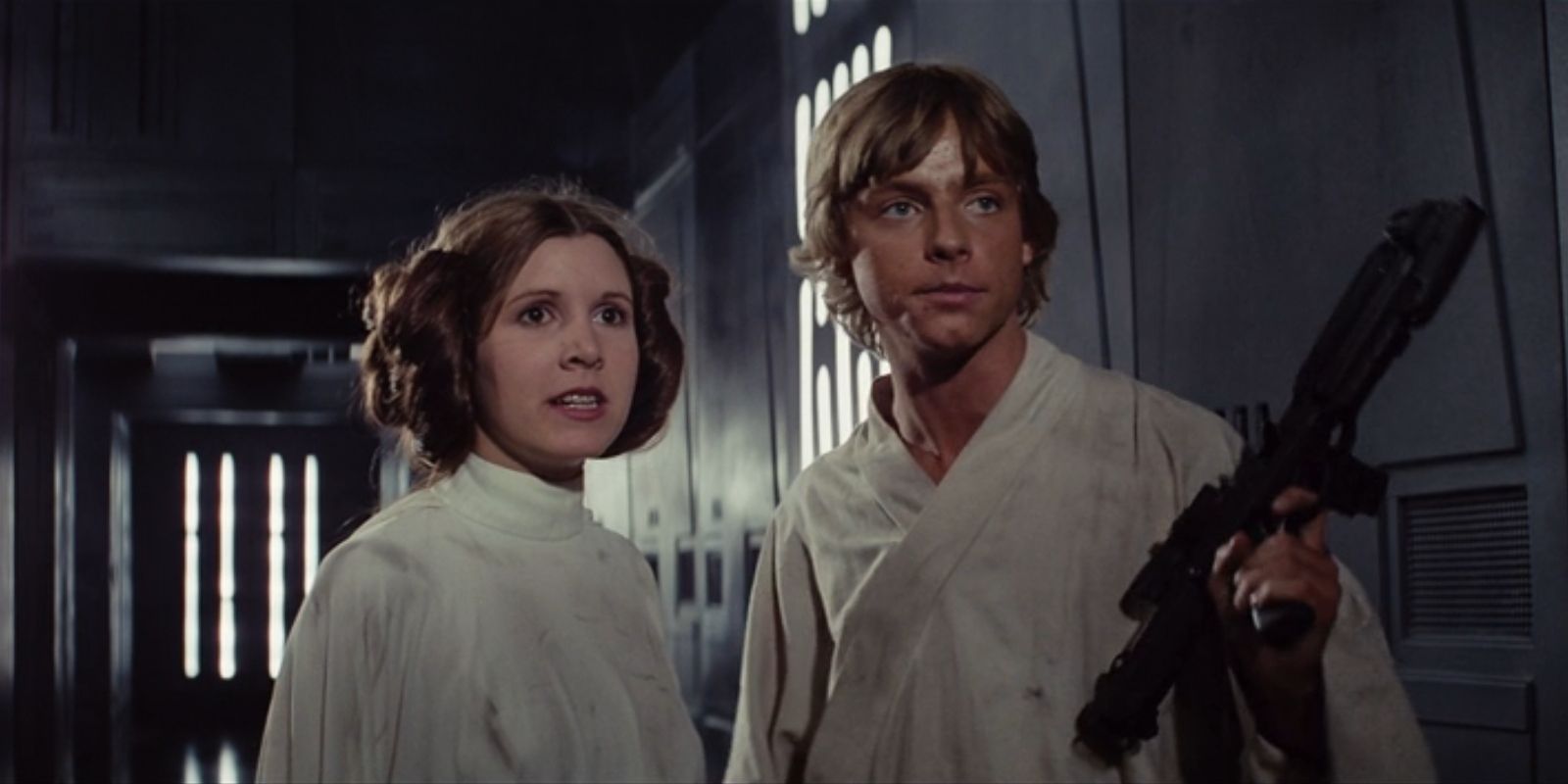
But it was, I thought, special to make this kind of an entry point for kids, especially now, going to the theater with their parents, and as, hopefully, they enjoy this movie, the world just opens up to them in a way. When I saw A New Hope, I was like, “Dad, it’s Episode IV. How did we miss three of these?” Well now, literally, you can start in Episode IV and say, “Oh, would you like to start with one? Here it is,” which kind of blows my mind. Not only that, we did the whole Clone Wars, so that’s available, too.
**What do you both think is the proper order for parents to show their kids the Star Wars movies? **
Is it starting with Episode I, or do you start with Star Wars and then do the theatrical release?
FAVREAU: It’s less controversial for me. I feel like [Episode] IV. I like watching it in the order I watched it in, but it might because that’s how I saw it. [Episode] IV drops you right in the middle of it. It’ll be interesting now with the rerelease of IV coming out next year. But I think it also builds the tone. Even though chronologically it’s one through nine, the technology of the filmmaking and the voice of the storyteller have changed. So I actually think that the order that they released it, I still back that. But I’ve never watched… Have you watched it from one through nine that way, in order?
FILONI: There’s no wrong way to watch Star Wars, Jon. There’s no wrong way.
Yeah, your best friend’s kids are watching it for the first time. What order do they watch it in?
FILONI: I don’t really have a bias. I think it’s really up to the parents, and I wouldn’t make that choice for them. Probably, at this point, I would say start with one. I mean, I’ll just ask George.
FAVREAU: Isn’t that what George says, too?
FILONI: I think so. I wouldn’t second-guess the maker.
Dave, I definitely have to ask you about the future Star Wars. I’m sure that there’s a balance between the studio and what you want to do in terms of, do you envision every other year having a movie in theaters, do you envision two shows a year on Disney+? How are you thinking about the future of Star Wars and what fans can look forward to?
FILONI: For me right now, rather than dealing with hard numbers like that, I’m just looking at the stories and the potential and planning what I’d like to do. I believe in having an overarching idea and then saying, “Okay, it’s this many of that, and then we can have that.” There are certain things that have been in motion already that, obviously, I want to continue. Jon and I have had a great partnership for many years now, telling stories. So, I look at the stories that I’m kind of planning and architecting, and I look at other creative talents that bring us, also, great stories, and I just try to find a way to make them all work.
There’s a lot on my plate, which is exciting, not just in live action, but animation, like Maul, which has been very fun, and they’re driving forward. I’ve got *Ahsoka *Season 2 coming, which is very exciting. I’m very excited about that. Shawn Levy did a great job with Starfighter. So, there’s a lot. And the rerelease of Episode IV. There’s so much exciting stuff coming already for Star Wars fans. But I have to say, I said this earlier, fans have known me now for 20 years that I’ve worked and told Star Wars stories, so I think that they have a good idea of what to expect. I’ve so far really enjoyed collaborating with everybody, and we are well on our way. The future’s in motion now. So, it’s exciting.
Could this lead to the reunion Star Wars fans have been waiting for?
The reveal of Grogu in The Mandalorian Season 1 was a major zeitgeist event. People freaked out. With the movie, did you guys debate putting in a zeitgeist moment like that, revealing something big about Star Wars, like a character like that, or were you like, “It’s Mando and Grogu on a mission?”
FAVREAU: I think different forms have different narrative structures to them. You write very differently for television than you do for a movie. A movie is about building to one crescendo event that people might not all see at the same time, but they’re going to see it as a group, and you want to shape the experience within that two-hour block. Then we’re going to give our partners at Disney and Lucasfilm the opportunity to cut trailers and bring people into this. So, everything in a film is about bringing people together as the movie comes out.
On a TV show, it’s different. On a TV show, you have less time to make it, you have more hours of story to fill, and you have an audience that’s leaning in and paying very close attention as all these threads play out. What you’re looking to do in TV is not necessarily have them all tuned in at the same time; you want to build that audience. One of the tricks you have is the reveals and what secrets, what twists you put in, what secrets are there, whether it’s character twists or reveals of new characters, changes within characters. You’re developing a long-term relationship with these people over many years, and that just changes the rhythm of it and how you weave that together.
We really, every once in a while, from the first episode of the first season to the last episode of the second season with Luke, we try to keep those secrets so that things were able to unfold and surprise and create conversation that might drive new people to adopt the series who may have been on the sidelines.
But I will say this, it was never for the purpose of a surprise. It was always for what’s best for the story. So, it just so happened that we said, “Hey, this is not something you might see coming. Do we mind not having a toy for the first year of this character? Do we mind not including this in the trailers?” And Disney and Lucasfilm were very cooperative, and I think they benefited from it because there seems to be a lot of excitement around these characters and these reveals in a way that I don’t think would have been had they been telegraphed ahead of time.
FILONI: I think it was very important to us that the fans got to experience meeting Grogu the way they did, that they owned that moment, that it wasn’t given to them in advance, that they knew what it looked like, so they knew what the mission was. You had such a good instinct on all of that to say, “Let’s hold that back. Let’s keep that back,” and I think that made it special.
But I’ll be honest, I never saw it as a zeitgeist moment when we were doing it. You never know. It was just a story we were telling. I’ve said this before, we were dead set on him not being cute in Season 1, trying to pull that back, because he gets so cute so quickly. We wanted it to be a little creature thing in the way he moved, the way he behaved, because the cuteness comes from you actually caring about him and connecting with him, and Mando taking care of him. Then he becomes a character, and he has more personality than when we even first see him. So, it was all very fun, but like Jon said, it’s all story-driven.
FAVREAU: It was all about, “Tune in next week.” That’s what you want to end on, and it was a very good tune-in-next-week moment when we revealed that kid, and it has really rung out along many years now.
The Mandalorian and Grogu is in theaters now.
](/tag/adventure/)
](/tag/action/)
Din Djarin / The Mandalorian