Published Jun 10, 2026, 12:14 AM EDT
Samuel is Collider’s List Flex Editor (previously Lead List Editor), which means he’s pretty much always hovering around Collider’s List department. A writing and editing automaton based in Nashville, Tennessee, and sometimes Los Angeles, Samuel has been working in entertainment journalism for over 10 years.
Samuel is the guy who talked to Betty White about vodka and hot dogs. Chaz Ebert once pinched Samuel’s cheeks after a screening of Beyond the Valley of the Dolls, when Samuel told her that Roger was and forever is his hero. William Friedkin once jokingly called Samuel “dad” at a screening of Samuel’s favorite movie, The Babadook. Forbes once called Samuel a “sneering critic” because he disliked Don’t Look Up.
Two major brands have trusted Samuel with curating their respective lists of** the 100 Best Movies of All Time**. Samuel wrote one of these lists in its entirety.
Other career highlights include appearing on KCRW and meeting Joe Morgenstern, and also spending 50 minutes talking to Tommy Wiseau on a landline (which was awesome).
Samuel loves his job and is rarely actively not doing it.
Sign in to your Collider account
One of the all-time masters of sci-fi and blockbuster filmmaking at large returns this week, as Steven Spielberg’s Disclosure Day opens under a fair amount of mystery for a project this large, with Emily Blunt,** Josh O’Connor **and Colman Domingo starring in a nostalgia-heavy adventure picture about a mysterious organization’s cover-up of human contact with extra-terrestrials. ***Jurassic Park **screenwriter David Koepp penned the script from an original story by Spielberg himself. Early critical response has been generally positive, though it remains to be seen if the picture *can recapture anything like the box-office magic of Spielberg in his heyday.
**Post-pandemic Spielberg has been an interesting time to say the least; in fact, it’s already starting to feel like a distinct era. *West Side Story ***and The Fabelmans saw no shortage of critical acclaim, with many observers calling both a return to top form. Both films are also remembered as rather infamous commercial failures. The following ranks all three Steven Spielberg movies of this decade so far from worst to best.
In this very modern, often dark and depressing world that we live in, and perhaps especially in a cinema landscape where no-budget indie horrors Backrooms and Obsession are eating Star Wars’ lunch at the box office, there’s something that feels remarkably quaint, perhaps even dated about this earnest throwback. Disclosure Day captures much of the spirit of Spielberg sci-fi classics, but it lacks the bite, innovation and staying power that made films like*** E.T. the Extra-Terrestrial***, Close Encounters of the Third Kind or even Minority Report touchstones that never really leave the conversation.
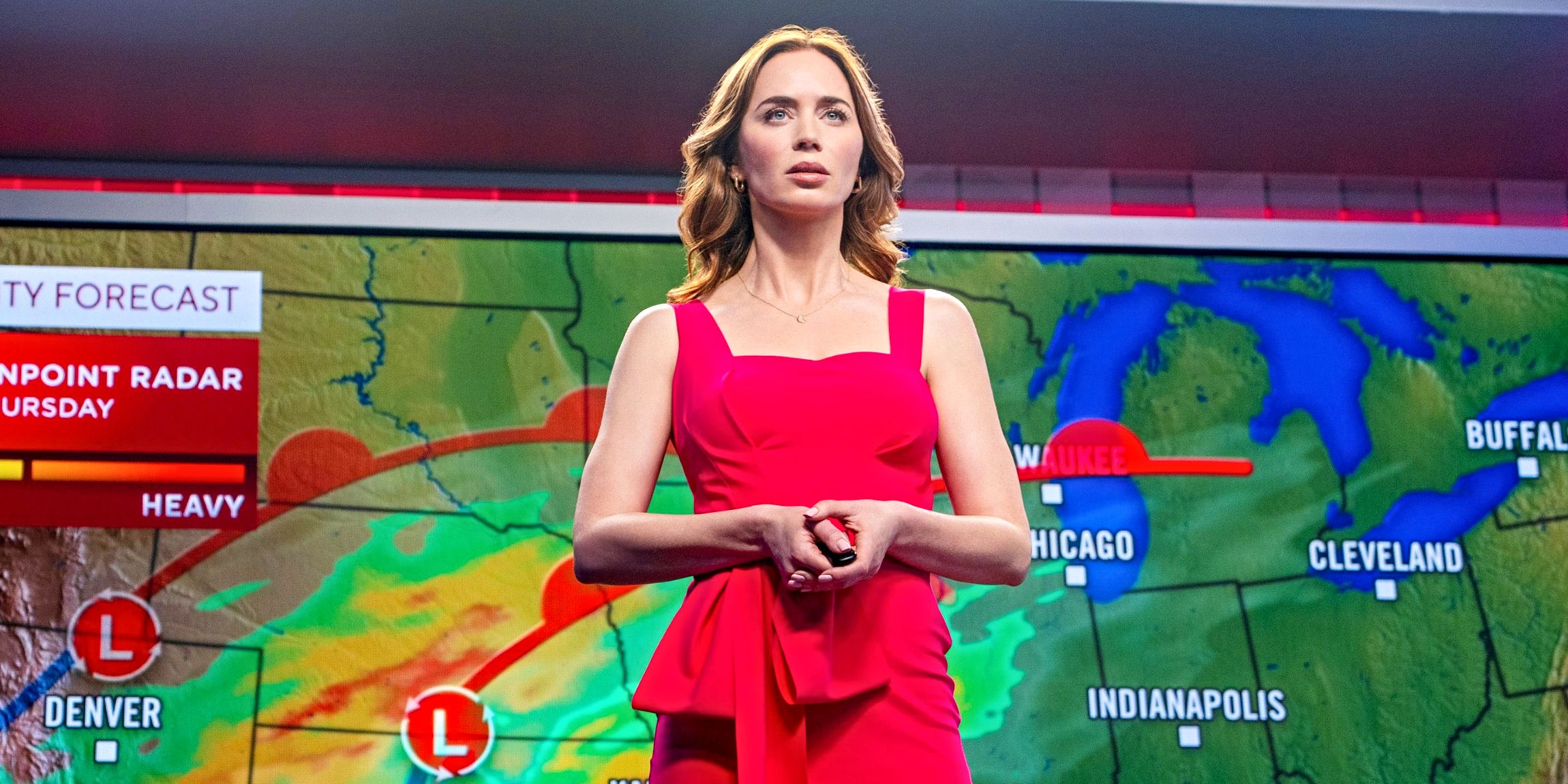
Disclosure Day is a showcase for a sensational, showy central performance from Emily Blunt. Playing a local news anchor who obtains psychic abilities and other enhancements, she’s undeniably captivating. Apart from her, though, none of the characters here are nearly on the level as those in Spielberg’s upper echelon.
The film is low on action, though the two chase set pieces that are there are pretty excellent. **Januz Kaminski **shot all three movies on this list, and this is the only one where the camerawork draws unnecessary attention to itself at times. Disclosure Day is handsomely crafted, and in many ways refreshing, particularly in its optimism, but it’s not the home-run instant classic some Spielberg diehards might be hoping for.
Here’s a film that nobody asked for, which ended up defying all expectations. It’s high praise indeed to say Spielberg’s remake of *West Side Story *is about equally good as Robert Wise’s classic 1961 Hollywood landmark. Both pictures have limited, critical flaws, but are mostly just exhilarating. As in the original film, the lead characters are simply not as interesting as Anita (Oscar-winning Ariana DeBose) or Bruno (David Alvarez). The musical numbers are breathtaking, though, from showstopping centerpiece “America” to the ever-rousing “Tonight (Quintet),” perhaps the most electrifying Broadway musical number ever composed. The best part of this 2021 remake, though, is a total reimagining of “Cool,” which is morphed into **a heartbreaking ballet of doomed bromance. **
Here’s a film that nobody asked for, which ended up defying all expectations.
There’s a baffling change in the third act, with the pivotal ballad “Somewhere,” typically sung by the young lovers, instead reassigned to a newly made-up character. It’s a choice to have such an important and emotional, climactic track sung by someone with the lung power of a 90-year-old, even if that person is Rita Moreno. It’s just an odd change that frankly stops the movie in its tracks a little bit and mutes its romantic power. Still, this is undeniably one of the best musicals of the 21st century, and a Spielberg triumph.
Even with a master director at the helm, a prestigious loose biopic like *The Fabelmans *was at risk of coming off as a vanity project, a therapy session, or a mixture of the two. It’s god-tier Spielberg, thanks largely to a script co-written with Tony Kushner, which affectingly creates a sprawling drama relatable to pretty much anyone who’s ever had a family life, full of victories and heartbreaks of various magnitudes.
Michelle Williams justifiably dominated awards conversation around the film, for a performance that could have easily been delivered as shrilly neurotic, but newcomer Gabriel LaBelle was just as good here, playing “Sammy” Fabelman with razor precision while never feeling like an imitation. Above all, *The Fabelmans *is a love story, about a love between a man and the movies. **It belongs on any list of the best movies about making movies, **along with the likes of 8 1/2, Singin’ in the Rain and Ed Wood.
It’s only been a few years, but it feels like time will be really kind to The Fabelmans. The final scene, starring David Lynch as a foul-mouthed and oddly helpful John Ford, was a hilarious highlight in 2022. It’s gained a new layer of emotional resonance since the master of surrealism and Americana passed in 2024.
Your answers have pointed to one Oscar Best Picture winner above all others. This is the film that was made for the way your mind works.
You are drawn to films that operate on multiple levels simultaneously — that begin in one genre and quietly, brilliantly migrate into another. Bong Joon-ho’s Parasite is a film about class, desire, and the architecture of inequality that manages to be darkly funny, deeply suspenseful, and genuinely shocking across a single extraordinary running time. Your instinct is for cinema that hides its true intentions until the moment it’s ready to reveal them. Parasite is exactly that — a film that rewards close attention and punishes assumptions, right up to its devastating final image.
You want it all — and this film gives you all of it. The Daniels’ Everything Everywhere All at Once is one of the most maximalist films ever made: action comedy, multiverse sci-fi, family drama, existential crisis, and a genuinely earned emotional core that sneaks up on you amid the chaos. You are someone who responds to ambition, who doesn’t want cinema to choose between being entertaining and being meaningful. This film refuses that choice entirely. It is overwhelming by design, and its overwhelming nature is precisely the point — because the feeling of being crushed by infinite possibility is exactly what it’s about.
You are drawn to cinema on a grand scale — films that understand history not as a backdrop but as a force, and that place their characters inside that force and watch what happens. Christopher Nolan’s Oppenheimer is a film about the terrifying gap between what we can do and what we should do, told with the full weight of one of the most consequential moments in human history behind it. You want your films to feel important without feeling self-important — to earn their ambition through sheer craft and the gravity of their subject. Oppenheimer does exactly that. It is enormous, complicated, and refuses easy comfort.
You are drawn to films that foreground their own construction — that make the how of the filmmaking part of the what it’s about. Alejandro González Iñárritu’s Birdman, shot to appear as a single continuous take, is cinema examining itself through the cracked mirror of a fading actor’s ego. You respond to formal daring, to the feeling that a film is doing something that probably shouldn’t be possible. Michael Keaton’s performance and Emmanuel Lubezki’s restless camera create something genuinely unlike anything else — a film that is simultaneously about creativity, relevance, self-destruction, and the impossibility of ever truly knowing if your work means anything at all.
You are drawn to cinema that trusts silence, that refuses to explain itself, and that treats dread as a form of meaning. The Coen Brothers’ No Country for Old Men is a film about the arrival of a new kind of evil — implacable, arbitrary, and utterly indifferent to the moral frameworks we use to make sense of the world. It is one of the most formally controlled films ever made, and its controlled restraint is what makes it so terrifying. You want your films to haunt you, not comfort you. You are not interested in resolution if resolution would be dishonest. No Country for Old Men is honest in a way that most cinema never dares to be.
](/tag/the-fabelmans/)
Steven Spielberg, Tony Kushner