Published Jun 11, 2026, 7:48 PM EDT
Jeremy has more than 2500 published articles on Collider to his name, and has been writing for the site since February 2022. He’s an omnivore when it comes to his movie-watching diet, so will gladly watch and write about almost anything, from old Godzilla films to gangster flicks to samurai movies to classic musicals to the French New Wave to the MCU… well, maybe not the Disney+ shows. His favorite directors include Martin Scorsese, Sergio Leone, Akira Kurosawa, Quentin Tarantino, Werner Herzog, John Woo, Bob Fosse, Fritz Lang, Guillermo del Toro, and Yoji Yamada. He’s also very proud of the fact that he’s seen every single Nicolas Cage movie released before 2022, even though doing so often felt like a tremendous waste of time. He’s plagued by the question of whether or not The Room is genuinely terrible or some kind of accidental masterpiece, and has been for more than 12 years (and a similar number of viewings). When he’s not writing lists - and the occasional feature article - for Collider, he also likes to upload film reviews to his Letterboxd profile (username: Jeremy Urquhart) and Instagram account. He has achieved his 2025 goal of reading all 13,467 novels written by Stephen King, and plans to spend the next year or two getting through the author’s 82,756 short stories and 105,433 novellas.
Sign in to your Collider account
If anyone ever tells you Westerns can’t be big or broadly appealing, tell them that’s just, like, their opinion, man. Westerns definitely could rule the box office, back in the day, and then they still sometimes become blockbusters nowadays, or at some point in time technically more recent than “back in the day.” Whenever that day was. It’s a bit up in the air.
Anyway, most of these Westerns did well at the box office, though some are old enough that box office earnings are a little hard to find, at least if you want reliable information. For the older ones, they were either popular, or they’ve endured as classics to this day. For the slightly newer ones, they’re here because they were critical and commercial successes. To qualify as a “blockbuster,” for present purposes, a movie also has to be pretty big in scale, or even an epic. Big, at least somewhat popular/profitable, and mostly well-received. With that, these are arguably the greatest of the Western blockbusters.
It sometimes gets labeled as a remake, but it’s probably more accurate to say that True Grit (2010) is just another adaptation of a novel that was first adapted in 1969. The novel – and both films – are about a young girl out for revenge, and she gets the help of an aging lawman to track down, and kill, the man who murdered her father.
True Grit (2010) is one of the more approachable Coen Brothers movies, since the vengeance-fueled story is easy to get behind, it moves at a good pace overall, and all the characters are very memorable. You could potentially even call it a crowd-pleaser, if you wanted to, and crowds were indeed pleased, since True Grit grossed quite a lot for a modern-day Western (just over $250 million, and technically even more if you adjust for inflation).
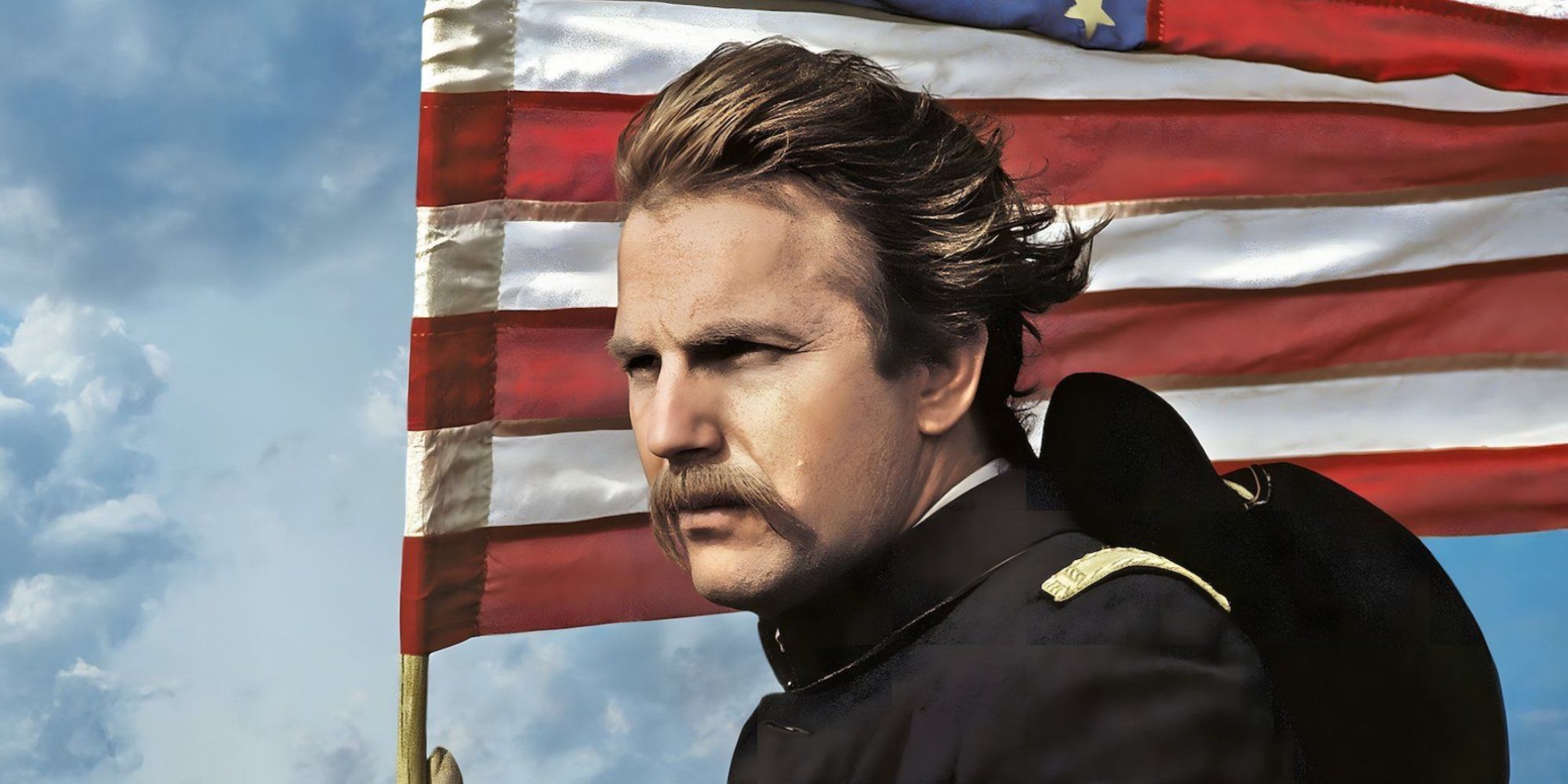
Sure, not all movies that win Best Picture at the Academy Awards are amazing, with some questionable picks in the show’s history, but Dances with Wolves is one of the more popular winners of its time. Sure, Goodfellas might’ve deserved Best Picture more, but you can still see why Dances with Wolves won, and it’s not like a bad movie beat Goodfellas or anything.
It was huge, in 1990, and might well be the highest-grossing Western of all time, if you adjust for inflation. It’s also still huge nowadays, owing to the length of Dances with Wolves: it’s well and truly an epic, at just over three hours for its theatrical cut. There’s a lot of spectacle delivered here, and you take that into account with the runtime, the broadly emotional narrative, and the willingness to please crowds, and then what you’ve got yourself is a definite Western blockbuster.
Tombstone is one of the beefiest Westerns of all time, for lack of a better word. No, actually, that’s the perfect word. It is a beefy, macho, bombastic movie. It’s pretty great. The film’s about Wyatt Earp, Doc Holliday, and the Gunfight at the O.K. Corral, with it delivering quite a bit of action, all the while having one of the most impressively assembled casts in the genre’s history.
All that’s more than enough, it turns out. Call that simple commentary, if you want, but it suits the bluntness and overall straightforward quality of Tombstone. It’s an unpretentious and sweeping movie, being pretty close to an epic in terms of its runtime and all the different characters it juggles. Also, even if it wasn’t an absolutely gargantuan box office success, it did well financially, and it’s continued to hold up with an enduring following (and fanbase? If that’s not too weird to say, about a single movie) in the years since it came out.
Given its age, box office information is a little scarce on The Searchers, but what can be found doesn’t look hugely impressive by today’s standards. Still, even if it didn’t feel like a blockbuster back in 1956 in the financial sense, it has always been an ambitious and sweeping Western, and it’s certainly earned acclaim in the decades since its release, often being considered one of the greatest Westerns of all time.
It’s a movie about a drawn-out search to find a young woman, which proves both physically and psychologically demanding to the man who undertakes it (played by John Wayne, giving what’s easily one of his best-ever performances). The Searchers goes to some interesting places thematically while delivering in terms of spectacle and visuals, not to mention the fact that it concludes with one of the most striking final images in cinema history.
Just a couple of years after True Grit, Django Unchained ended up being another popular and highly acclaimed Western about revenge, though the story here also involved a good old-fashioned rescue mission, alongside the revenge. It’s fairly simple stuff narratively, for Quentin Tarantino, because even Kill Bill had a good deal more to offer once you got to the second volume, with some of the character development contained therein somewhat surprising.
For better or worse, Django Unchained is about what you’d expect, but it’s expected and very good at the same time. Giving the people what they want isn’t always a bad thing, after all, and Django Unchained gets by because there’s a good deal of style, some (though not all) of the characters are memorable, and then plenty of the action scenes prove immensely cathartic.
Okay, here’s another Western about revenge, and like Django Unchained, this one’s also got Leonardo DiCaprio in it. It’s The Revenant, and it’s about a man being left for dead in the wilderness, though he survives (after being mauled by a grizzly bear), and then he continues fighting to stay alive so he can kill the people who left him to die. Also, one of them killed his son, so there’s an extra motivation for the whole revenge thing.
It’s technically an adventure movie done on an epic scale, but The Revenant isn’t really a fun adventure movie, to put it mildly. There’s a real savagery and intensity to the whole thing, even if it’s also undeniably spectacular. There was enough by way of spectacle and things to connect with here for The Revenant to actually make quite a lot of money, in the end, so it was a popular release (more than $500 million worldwide, against a budget of approximately $135 million).
Unforgiven is the best Western Clint Eastwood ever directed, and it’s possibly the best he ever starred in, or maybe there’s a certain film from 1966 that might get mentioned shortly that’s even (arguably) better. With Unforgiven, it concerns an effectively retired outlaw/killer who turns once more to violence, but of a potentially redemptive variety, taking on a job that involves hunting down and killing two men who were involved in a brutal attack on a prostitute.
They’re also two men who were let off lightly by a corrupt sheriff, and so taking on this particular job means getting on his bad side. There’s a lot of conflict here, and the way it explores Old West justice (or injustice) is undeniably interesting, with that side of things never fully getting in the way of – or distracting from – how engaging Unforgiven also is narratively and emotionally.
You’d hope a movie with the name Once Upon a Time in the West would feel grand, and also defining for the genre as a whole, and it is undoubtedly successful on both those fronts. There is one other Sergio Leone Western from the same decade that’s perhaps even better, or at least a little more in line with what you’d expect out of a “blockbuster,” but more on that one a little later.
Once Upon a Time in the West is about a widowed woman defending a piece of land from a ruthless killer, with a couple of mysterious men (one of whom has his own past with the killer) aiding her. Yet the story here is only a small part of Once Upon a Time in the West, really, and it’s the kind of thing where you know you’re in for something special – not to mention a little unusual – right from the start.
Functioning as both a buddy movie (even a buddy comedy at times) and a Western, Butch Cassidy and the Sundance Kid is wonderfully approachable, to the extent that you don’t really have to be big into Westerns to enjoy it. The titular characters are outlaws, and very likable ones at that, but they’re not very well-liked by those around them, since they keep stealing from people and making copious enemies.
It gets just about everything right, and is one of those movies that truly feels great in an effortless sort of way.
So, much of Butch Cassidy and the Sundance Kid involves the two main characters going on the run, with the sense of adventure, the escalating action, and the dynamic between those two main characters making it all very entertaining. It gets just about everything right, and is one of those movies that truly feels great in an effortless sort of way. It was also a big deal, back in 1969, earning $102 million (a lot more back then than $102 million nowadays) in the U.S. alone.
Even if The Good, the Bad and the Ugly was nothing except an amazing climax, it would still probably be among the best Westerns ever made. You could suffer through about two and a half hours of so-so – or even tedious – stuff, but then if the payoff to it all was as amazing as the last 15 to 20 minutes of this, it’d make all the lesser scenes that came before feel forgivable.
Thankfully, what you actually get with The Good, the Bad and the Ugly is a movie that’s amazing throughout, and then somehow a little more amazing at the very end. It’s about three guys trying to get to some buried gold before anyone else, and it’s riveting, doing so much with a simple premise, and also feeling about as big, entertaining, and exciting as Westerns can conceivably get.
The Good, the Bad and the Ugly ](/tag/the-good-the-bad-and-the-ugly/)