Published Jun 14, 2026, 11:32 PM EDT
Amanda M. Castro is a Network TV writer at Collider and a New York–based journalist whose work has appeared in Newsweek, where she contributes as a Live Blog Editor, and The U.S. Sun, where she previously served as a Senior Consumer Reporter.
She specializes in network television coverage, delivering sharp, thoughtful analysis of long-running procedural hits and ambitious new dramas across broadcast TV. At Collider, Amanda explores character arcs, storytelling trends, and the cultural impact of network series that keep audiences tuning in week after week.
Born and raised in Puerto Rico, Amanda is bilingual and holds a degree in Communication, Film, and Media Studies from the University of New Haven.
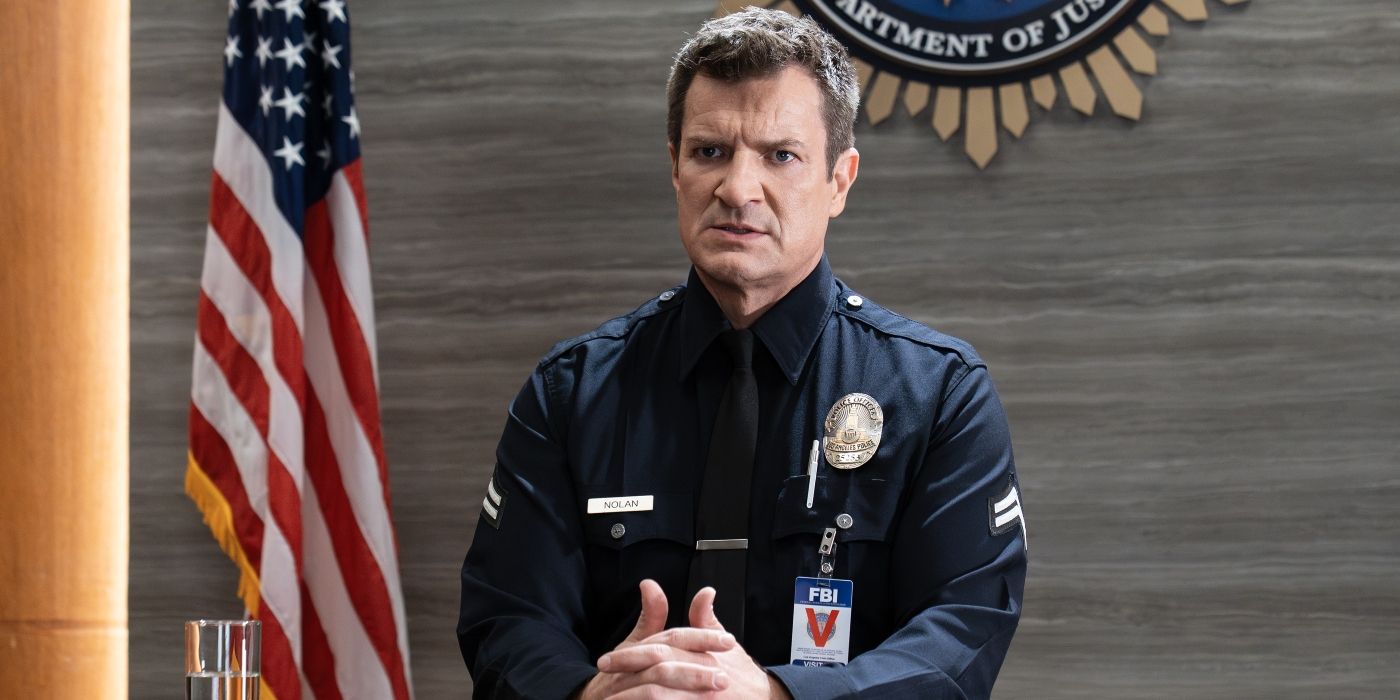
Police procedurals thrive on formula, but even the most reliable shows need to shake things up once in a while. The Rookie has done exactly that through its documentary-style episodes, a recurring gimmick that began in Season 3 with “True Crime” and has returned almost every season since. These mockumentary-style episodes parody true-crime docuseries, framing Mid-Wilshire officers as talking heads while weaving in body cam footage and 911 calls.
For many fans, though, these are the most hated installments of the show. Scroll through Reddit threads or TikTok comments, and you’ll find plenty of complaints about the episodes being boring, convoluted, or even immersion-breaking. And yet, despite the criticism, there’s a strong case to be made that The Rookie’s documentary episodes are far more effective than they get credit for — aside from one subpar episode in Season 7 that shows what happens when the format goes too far.
The central complaint against the docu-episodes is that they’re gimmicks, unnecessary departures from the regular balance of drama and comedy. But that’s exactly what makes them worthwhile. Police procedurals can easily fall into repetitive patterns, and a one-off format change breaks up the rhythm without derailing the overall story.
In their best versions — like Season 3’s “True Crime” and Season 4’s “Real Crime” — the episodes offer an outsider’s perspective on the Mid-Wilshire division. The officers are suddenly self-conscious, aware of how they appear on camera, which adds texture to characters we think we know well. Fans get glimpses of how Lucy Chen (Melissa O’Neil), Nyla Harper (Mekia Cox), or Tim Bradford (Eric Winter) see themselves versus how the world sees them. It’s both comedic and revealing, and the satire of true-crime obsession gives the show a chance to poke fun at itself.
Your answers have pointed to one action hero above all others. This is the person built to have your back — for better or considerably, spectacularly worse.
Your partner doesn’t talk much, doesn’t need to, and will have assessed every threat in your immediate environment before you’ve finished your first sentence. John Rambo is not a man of plans or politics — he is a force of nature shaped by survival, loyalty, and a capacity for endurance that goes beyond anything training can produce. He will not leave you behind. He has never left anyone behind who deserved to come home. What you get with Rambo is the most capable, most quietly ferocious partner imaginable — one who has been through things that would have broken anyone else, and who chose to keep going anyway. You’ll never need to ask if he has your back. You’ll just know.
Your partner will arrive perfectly dressed, perfectly briefed, and with a cover story so convincing it’ll take you a moment to remember what’s actually true. James Bond is the most professionally dangerous person in any room he enters — and the most disarmingly charming, which is the point. He operates in a world of layers, where nothing is what it appears and every advantage is used without apology. You’ll never be bored. You’ll occasionally be furious. But when it matters — when the mission is genuinely on the line and the margin for error has collapsed to nothing — Bond is exactly the partner you want. He has survived things that have no business being survivable. He does it with style. That is not nothing.
Your partner will know the history, the language, the cultural context, and exactly why the thing everyone else is ignoring is actually the most important thing in the room. Indiana Jones is brilliant, reckless, and occasionally impossible — but he is also one of the most resourceful, most genuinely knowledgeable partners you could find yourself beside. He approaches every situation with a scholar’s eye and a brawler’s instinct, which is an unusual combination and a remarkably effective one. He hates snakes and gets personally attached to objects of historical significance, both of which will slow you down at least once. It doesn’t matter. What Indy brings is irreplaceable — and the adventures you’ll have together will be the kind people write books about. Assuming you survive them.
Your partner was not supposed to be here. He does not have the right equipment, the right information, or anything approaching the right odds. He has a sarcastic remark and an absolute refusal to accept that the situation is as bad as it looks. John McClane is the greatest accidental hero in the history of action cinema — a man whose superpower is stubbornness, whose contingency plan is improvisation, and whose capacity to absorb punishment and keep moving would be alarming if it weren’t so useful. He will complain the entire time. He will make it significantly more chaotic than it needed to be. And he will absolutely, unconditionally, without question come through when it counts. Yippee-ki-yay.
Your partner has already run seventeen scenarios by the time you’ve finished reading the briefing, and the plan he’s settled on involves at least two things that should be physically impossible. Ethan Hunt operates at the absolute edge of human capability — technically, physically, and intellectually — and he brings the same relentless precision to protecting his partners that he brings to dismantling organisations that shouldn’t exist. He is not easy to know and he will never fully tell you everything. But he will carry the weight of the mission so completely, so absolutely, that your job is simply to trust him — and the remarkable thing is that trusting him always turns out to be the right call. The mission will be impossible. He will complete it anyway.
On top of that, the documentary framing lets the writers lean into bizarre, idiosyncratic cases without breaking the tone of the main series. Instead of dragging out a standard case-of-the-week, the mockumentary structure gives permission for the show to play, whether that means absurd interviews, outlandish side characters, or offbeat narrative devices.** In short, they’re filler episodes that don’t feel like filler.**
A perfect example of the second installment of the documentary-style series, titled “Real Crime,” which delves deep into Aaron Thorsen’s (Tru Valentino) backstory. With the weight of his troubled past still a large part of his life and a reputation to build, Aaron ultimately agrees to participate in a reality series that promises to rebrand him. What appears to be an opportunity to rebuild his image devolves into chaos when the producer of the reality show is murdered on camera, with Aaron once again in the crosshairs of suspicion. The case examined in the show also implicates Aaron’s own complicated relationship with Rowan (Luke Cosgrove), his manipulative friend who had been running drugs on the side.
What is most interesting about “Real Crime,” however, is how the documentary gimmick engages in character development. We hear Aaron’s squadmates express their doubts and support through the interviews, all culminating in Rowan being exposed as the actual killer of Patrick (Timothy Taratchila) — Thorsen’s dead best friend — and Morris (Rome Flynn). At the end of Aaron’s story, he receives validation from his coworkers and Patrick’s grieving father, thereby giving the format meaning beyond the stylistic flair.
To be fair, critics of the documentary episodes aren’t wrong about everything. The biggest issue is the glaring plot hole: **If Lucy and Harper appear in a nationally released true-crime docuseries, how can they believably go undercover in later episodes of The Rookie? **The series has never addressed this, and it strains credibility when characters who rely on anonymity are suddenly recognizable to anyone who binge-watches true crime on Hulu.
Even with that flaw, though, the docu-episodes have mostly been fun experiments — though Season 7’s “A Deadly Secret” was a miss. This episode tried to cram in every possible subplot, from a missing ex-fiancée to a haunted psychiatric ward to an AI named Zuzu. The result was chaotic and disjointed, losing the charm of earlier mockumentary episodes. While there was one highlight — a heartfelt Chenford moment triggered by a truth serum — the episode’s messy plotting showed how the gimmick can backfire when it’s overloaded.
Instead of giving us a sharp parody or a quirky detour, “A Deadly Secret” collapsed under the weight of its own tangled storylines. It’s the rare case where fan complaints about the format being “boring” or “too much” really rang true.
Despite their divisive reception, the documentary episodes remain some of the most memorable in the series. They’re conversation starters, even among viewers who don’t like them. They parody the cultural fascination with true crime, they give characters unexpected moments of vulnerability, and they prove that The Rookie is willing to take risks rather than stick to a procedural comfort zone.
Nathan Fillion’s long-running ABC drama left us speechless.
The Season 7 stumble shouldn’t automatically mean that the format doesn’t work. **Used sparingly and with focus, the mockumentary episodes still have value. **If anything, the writers should refine them: Tighten the stories, acknowledge the undercover plot hole, and resist the temptation to overload the format with too many callbacks or side characters. Because when they work, The Rookie’s documentary episodes aren’t the show’s weakest link — they’re proof that even in a genre built on formula, experimentation can pay off.
Tori Garrett, Chi-Yoon Chung, Michael Goi, Sylvain White, Lisa Demaine, Lanre Olabisi, Bill Johnson, David McWhirter, Liz Friedlander, Daniel Willis, Toa Fraser, Anne Renton, Jon Huertas, Cherie Nowlan, TK Shom, Rob Seidenglanz, Valerie Weiss, Barbara Brown, Charissa Sanjarernsuithikul, SJ Main Muñoz, Nelson McCormick, Marcus Stokes, Adam Davidson, Anna Mastro
Corey Miller, Bill Rinier, Zoe Cheng, Mary Trahan, Ally Seibert, Liz Alper, Nick Hurwitz, Racheal Seymour, Madeleine Coghlan, David Radcliff
Starting over isn’t easy, especially for John Nolan who, after a life-altering incident, is pursuing his dream of joining the LAPD. As their oldest rookie, he’s met with skepticism from those who see him as just a walking midlife crisis.