Published Jun 19, 2026, 12:06 PM EDT
Jeremy has more than 2600 published articles on Collider to his name, and has been writing for the site since February 2022. He’s an omnivore when it comes to his movie-watching diet, so will gladly watch and write about almost anything, from old Godzilla films to gangster flicks to samurai movies to classic musicals to the French New Wave to the MCU… well, maybe not the Disney+ shows. His favorite directors include Martin Scorsese, Sergio Leone, Akira Kurosawa, Quentin Tarantino, Werner Herzog, John Woo, Bob Fosse, Fritz Lang, Guillermo del Toro, and Yoji Yamada. He’s also very proud of the fact that he’s seen every single Nicolas Cage movie released before 2022, even though doing so often felt like a tremendous waste of time. He’s plagued by the question of whether or not The Room is genuinely terrible or some kind of accidental masterpiece, and has been for more than 12 years (and a similar number of viewings). When he’s not writing lists - and the occasional feature article - for Collider, he also likes to upload film reviews to his Letterboxd profile (username: Jeremy Urquhart) and Instagram account. He has achieved his 2025 goal of reading all 13,467 novels written by Stephen King, and plans to spend the next year or two getting through the author’s 82,756 short stories and 105,433 novellas.
Sign in to your Collider account
To summarize a whole decade in 200 words, or fewer, is kind of preposterous. But when it comes to the 1960s… change? A decade of change? It was a historically important decade, though pretty much all decades are. Still, maybe a little more historically significant – and packed with generally dramatic things happening – than some other decades.
It’s a bit easier to summarize the music of the 1960s, with the rise of the album (as an art form), and then you can also unpack the cinema of the decade by discussing the various New Wave movements that were big in different territories around the world, including the start of the New Hollywood movement in the U.S. The literary side of things… look, there were good novels released, same as any decade. Some particularly classic ones are below, with the following being among the best books of the 1960s (lots of usual suspects, and then maybe a few that aren’t quite as well-known, but deserve to be known).
The Outsiders is famous for being a coming-of-age book written by someone who was incredibly young at the time: S.E. Hinton. She was still only 18 when it was published, and wrote most of it even earlier, at around the age of 15 or 16. That gives it a good deal of authenticity, since the characters of The Outsiders are all incredibly young, and grappling with certain things everyone grapples with, at a certain age.
You’re probably best off reading it when you’re of a similar age, too, but if it takes you until adulthood to actually sit down and read The Outsiders, you’re likely to be pleasantly surprised by how mature and well-written it is. There’s nothing pretentious or insincere here, and for a book about young people in the 1960s to still feel resonant and authentically about the trials and tribulations of growing up nearly 60 years later is undoubtedly worthy of praise.
Hard to define when it comes to genre, and then hard to grapple with in many other regards, too, The Master and Margarita is just gonzo stuff all around. It’s even hard to pin down what decade it belongs to, since it was written primarily in the 1930s, first published in the 1960s (albeit slightly censored), and then published uncut in 1973… and that’s before getting into the different translations.
Yet that’s still easier to go through and ramble about than explain what happens in The Master and Margarita. It’s a bit of a fever dream, and that’s the best way to experience it unless you’re more knowledgeable about certain political and social events from the Soviet Union’s history, because there’s a lot going on here thematically and allegorically. It’s kind of a nightmare, albeit a classic, continually interesting, and overall essential one.
While it might not be as impressive as some of Thomas Pynchon’s later novels, The Crying of Lot 49 is still pretty great, and certainly the one that’d be best to start with, if you’re completely new to this unusual author’s very unusual work. It’s easily the shortest of his, which plays a big role in it being quite easy to get through, and it has a somewhat summarizable plot that boils down to “A woman named Oedipa is nominated as executor of an estate and begins to unravel some kind of conspiracy.”
Emphasis on “begins,” since this is the kind of mystery story that’s a lot more concerned with the mystery than things that could be considered answers. Still, the ride provided by The Crying of Lot 49 is engaging, and not having closure in the traditional sense doesn’t run the risk of feeling as frustrating when the novel itself isn’t too long. It’s hard to make it sound not frustrating to read, but it really isn’t. It’s a good entry point or warm-up to Pynchon, in the sense that if you like this, you’ll probably like a bunch of his later books even more, and if you don’t like this, you should probably stay the hell away from those same later books.
There are a couple of epic-length books that’ll be mentioned in a bit, but one thing that is becoming at least somewhat clear, when looking through particularly notable novels from the 1960s, is that quite a few do a lot without going on for very long. A Clockwork Orange is in this camp, because it’s not the kind of thing that should take you more than a few hours to read (unless you get really stumped on some of the language and feel compelled to literally understand every single word).
It’s a psychologically harrowing book that deals with a lot thematically, doing so while having a dystopian setting and thereby kind of being a work of science fiction, too. A Clockwork Orange looks at the potential for technology to be used/misused for the purpose of making society free of crime, unpacking what that means for humanity and the idea of free will. For as long as there exists crime, and debates surrounding what to do with people who have committed crimes, A Clockwork Orange will surely remain relevant.
A Clockwork Orange ](/tag/a-clockwork-orange/)
Science Fiction
](/tag/science-fiction/)
Stanley Kubrick
Stanley Kubrick
‘Slaughterhouse-Five’ (1969)
Slaughterhouse-Five hasn’t really aged well, technically, since it’s more accurate to say it’s not really aged at all. Aging well does require aging, and Slaughterhouse-Five is unstuck in time, entirely its own thing, which feels so fitting for a book that features a lot of jumping around in time, centered on a protagonist who does not have a center, with his pre-World War II, World War II, and post-World War II experiences all bleeding together.
Slaughterhouse-Five manages to be properly disturbing at points, too, and seeing so much that’s balanced tonally and genre-wise within a book that’s ultimately only about 200 pages long is continually pretty astounding.
It’s a confusing read, but in a good way, and it remains hard to describe and think about. Somehow, it’s also entertaining to read, but “entertaining” feels like a bit of a strange word to use, even if there are some thrilling sci-fi-related ideas and parts of the book that are intended to be darkly funny. Slaughterhouse-Five manages to be properly disturbing at points, too, and seeing so much that’s balanced tonally** and genre-wise** within a book that’s ultimately only about 200 pages long is continually pretty astounding, to say the least.
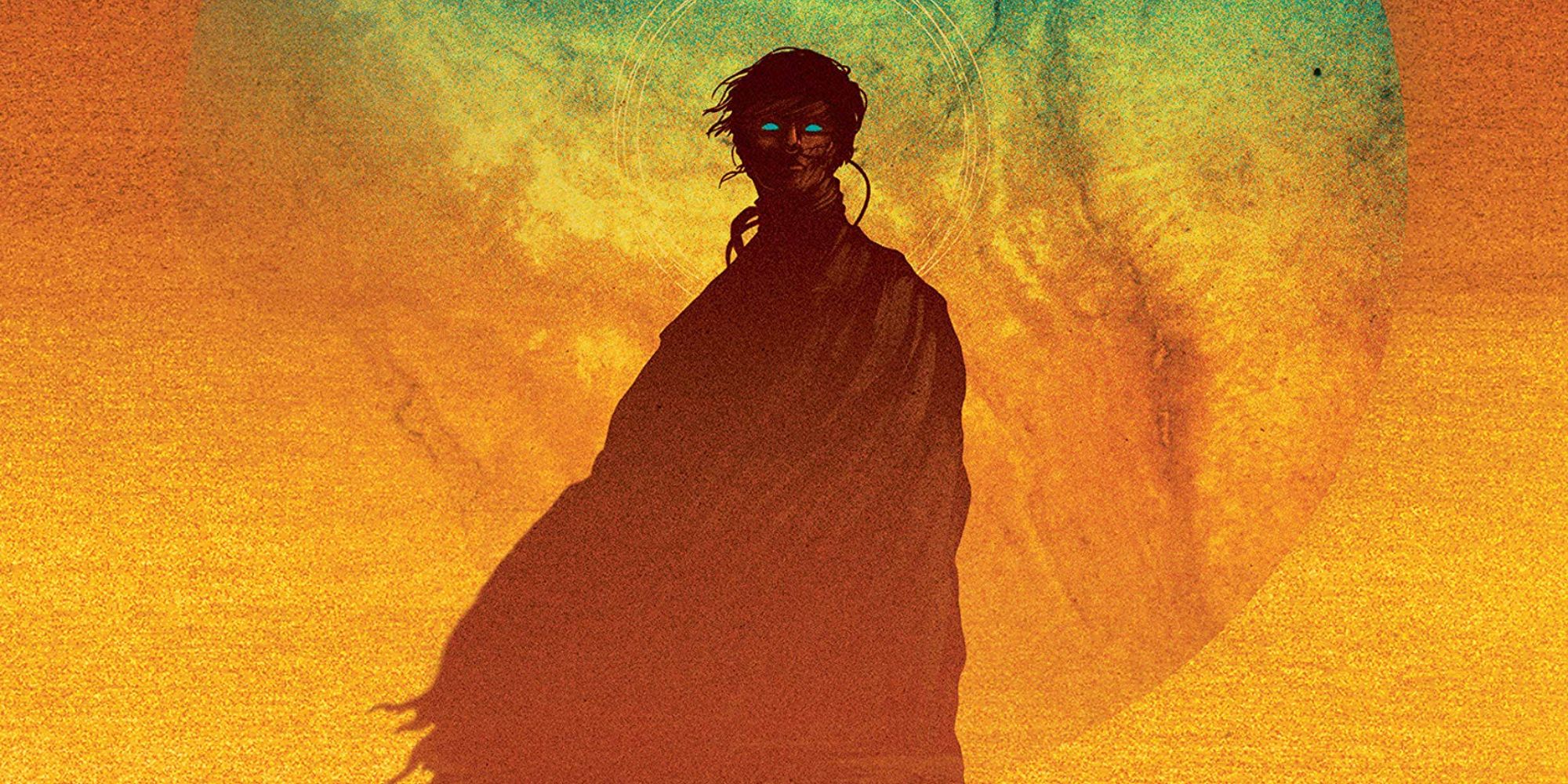
Just as discussions around great fantasy novels of the 20th century will inevitably involve a mention (or, preferably, mentions) of The Lord of the Rings, so too is Dune something you have to bring up if you’re talking about the greatest sci-fi novels of the last century. It’s about a conflict between powerful families over the desert planet of Arrakis, and how a young man from one of those families transforms (a little too effectively) into a conqueror.
What Dune does thematically and narratively is ultimately a lot more interesting than your average sci-fi or fantasy story. And, even if it didn’t do much to subvert – or challenge – expectations in those regards, Dune would probably still remain a classic for the inventiveness of the world and some of the attached sci-fi concepts it builds and expands. There’s just so much here, and that’s before getting to the fact that this book basically started a whole series, and then a franchise that goes beyond just literature… but you can’t really beat the first book, here. It is about as iconic as science fiction novels get.
Ignoring the oddity that was Go Set a Watchman (an interesting rabbit hole to disappear down, if you feel like you’ve got a lot of spare time on your hands), To Kill a Mockingbird was famously the only novel Harper Lee ever had published during her lifetime. It’s a bit like J.D. Salinger’s The Catcher in the Rye, in that regard, though that novel is famously unlikely to ever get a movie adaptation, while To Kill a Mockingbird is well-known for having one of the all-time great movie adaptations based on it.
Both books are read in high school quite often, too, so you might well find detractors of both, since some people just really don’t like English, as a subject, and have a negative response to books they might well have been forced to analyze. But with To Kill a Mockingbird, there is just a lot to like here, and you’ll probably find fewer detractors than what you’d get with The Catcher in the Rye or another high school reading staple like The Great Gatsby. It is an undeniable classic, and calling it an undeniable classic is a bit boring, much as it’s boring to say “Halo: Combat Evolved is a good video game” and “Citizen Kane is a good movie,” but that doesn’t make it not true.
It feels a little weird to call a nonfiction book a psychological thriller, so let’s kind of avoid doing that, and maybe call In Cold Blood… hmm. Well, it does get into the psychology of the people involved in a horrific crime, and what might’ve motivated the killers to do what they did, so it’s like a psychological crime novel, albeit a nonfiction one, and a precursor to “true crime” literature that feels a good deal more respectful and thought-provoking than most modern books that can be described as such.
In Cold Blood is about the 1959 Clutter family murders, and was written by Truman Capote, though he did so with research assistance from Harper Lee, with work on In Cold Blood technically starting before the publication of Lee’s To Kill a Mockingbird. Promise, it’s a coincidence that both these books ended up here so close together… they’re pretty different, all things considered, aside from both ultimately being published in the same decade.
William L. Shirer wasn’t in Germany for the entire rise and fall of Nazi Germany, which officially started in 1933 and then ended with the end of World War II, in 1945, but he was there for a good chunk of that time, leaving Germany in 1940. So, he’s probably more qualified than most to write a book called The Rise and Fall of the Third Reich, which is… well, it’s about just that.
It is a lengthy book, because you say it’s more than 1200 pages, and that already sounds long, but the font and formatting make it more of a monumental book to work through than other books that are “technically” just as long, going by page count alone. There’s also a density to the language and an uncompromising approach to exploring some confronting subject matter that makes The Rise and Fall of the Third Reich further challenging to read. Still, so much of it feels essential as a document of a tumultuous time in history, and a time in history that, in the overall scheme of things, really wasn’t that long ago.
A book about a guy living a life and that’s about it, but also, that’s everything, because that’s life, Stoner is something of a hard sell. At the same time, it’s hard to imagine too many people reading it and not getting anything out of it. William Stoner grapples with the highs and lows of life, with more of an emphasis on the lows, in all honesty, as it’s a life defined by hardships of both the personal and professional variety.
It could be called “slice-of-life,” or like something of a biographical book about a person who didn’t actually exist… at least not technically. William Stoner does feel real, though, and the understated drama throughout Stoner also feels grounded to the point that it’s sometimes brutal to read. It does what the best Yasujirō Ozu films do, in spinning a surprising amount of emotional depth and catharsis out of stuff that might sound too mundane or ordinary to make an actual story about. Didn’t stop Ozu, though, and neither did it stop John Williams (no, not that one), when he wrote Stoner.