Published Jun 30, 2026, 7:42 PM EDT
Julio is a Senior Author for Collider. He studied History and International Relations at university, but found his calling in cultural journalism. When he isn’t writing, Julio also teaches English at a nearby school. He has lived in São Paulo most of his life, where he covers CCXP and other big events. Having loved movies, music, and TV from an early age, he prides himself in knowing every minute detail about the things he loves. When he is older, he dreams of owning a movie theater in a small countryside town.
Editor’s Note: The following contains spoilers for House of the Dragon Season 3, Episode 2.The Dragon Queen finally sits the Iron Throne, but it hardly feels like a victory. In this week’s episode of House of the Dragon, Rhaenyra Targaryen (Emma D’Arcy) takes King’s Landing, as per her agreement with Alicent Hightower (Olivia Cooke), and legitimizes her position by beheading Ser Otto Hightower (Rhys Ifans), the mastermind of all her misfortune, herself. It’s a superbly acted and conceived scene, and it sets the tone for what Rhaenyra’s “rule” will probably look like. It also significantly improves on the original story told in Fire & Blood by making a twisted callback to the very beginning of Game of Thrones, and subverting one of its most important principles.
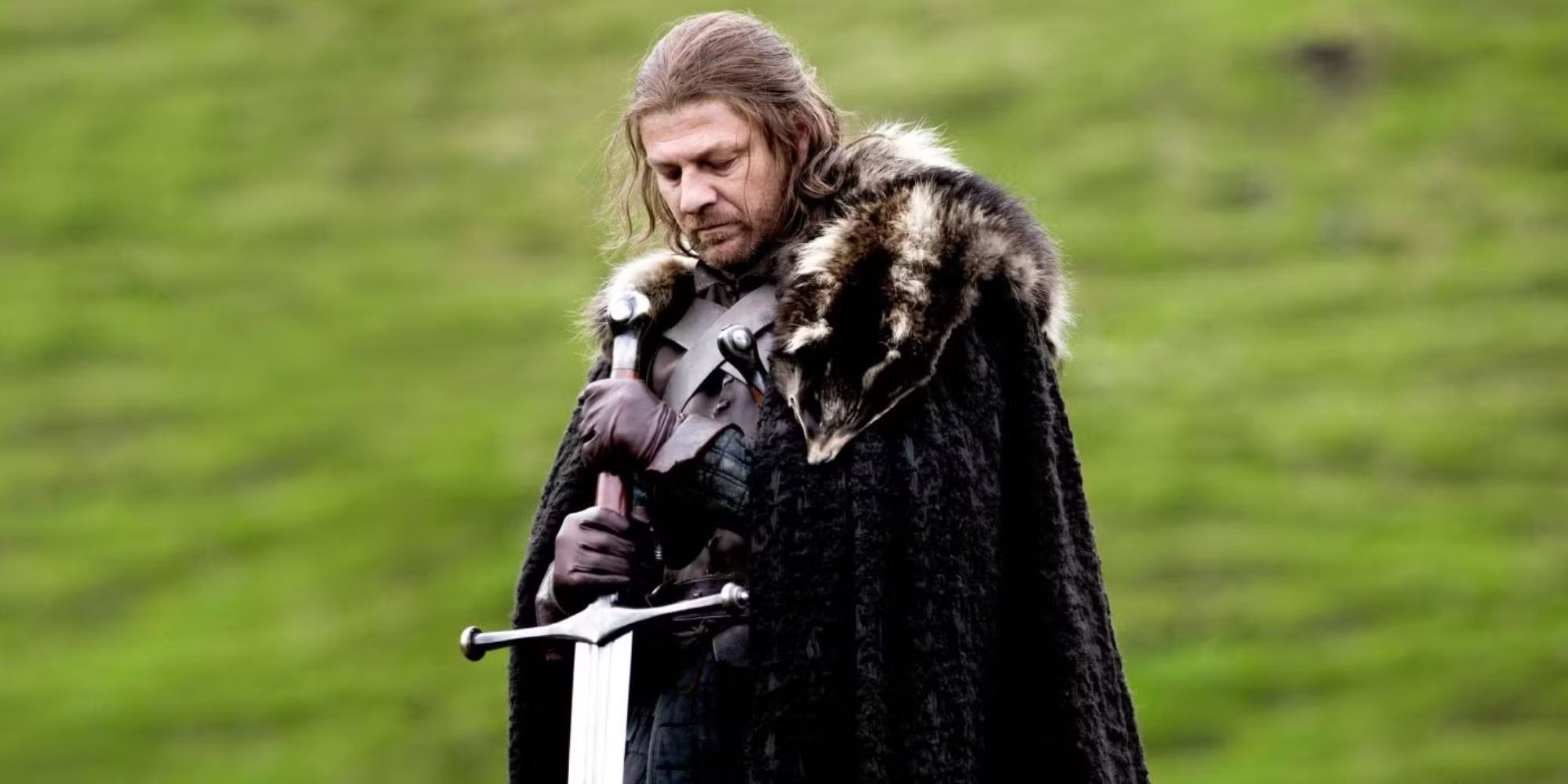
“The man who passes the sentence should swing the sword.” This is easily one of the most celebrated quotes in Game of Thrones, and is part of the lesson given by Ned Stark (Sean Bean) to his son, Bran (Isaac Hampstead-Wright), in the series premiere, when they must execute a deserter of the Night’s Watch. The idea is that whoever is powerful enough to deal out a death sentence should also be responsible enough to carry it out themselves; otherwise, there is hardly any legitimacy in the sentence, regardless of the dealer’s position.
Your answers point to the great house whose words, values, and way of surviving in Westeros match your own. Bend the knee — or don’t. That’s very much up to you.
Winter is Coming — and you have always known it. You prepare not out of fear but out of duty, because the people who depend on you deserve someone who takes the long view.
You understand the game — its rules, its exceptions, and exactly when the rules become the exception. You play it without illusions and without apology.
You carry a sense of destiny that is difficult to explain and impossible to ignore — the feeling that you are not simply participating in the world but meant to reshape it.
You are a force — direct, powerful, and difficult to ignore when you enter a room or a conflict. You do not negotiate with challenges. You meet them.
You understand that power does not always announce itself — that sometimes it arrives with flowers, good wine, and a smile that doesn’t quite reach the eyes.
Although this principle is usually connected to House Stark, House of the Dragon brings it back when Rhaenyra beheads Ser Otto herself, but with a dark twist. Instead of a matter of honor, leadership, and responsibility, Rhaenyra’s deed is all about displaying strength and resolve as the new queen, especially after she is given Dark Sister by Daemon (Matt Smith) to do as a show of power. In this case, Rhaenyra has never killed anyone, unlike Ned or Daemon, and her hand is forced by the circumstances.
The result is basically a horrific scene. At her limit after losing yet another child earlier that episode, Rhaenyra botches her first attempt at Otto’s neck, hitting his back instead and drawing gasps from everyone present; only at the second attempt does she manage a clean swing. It’s far from the triumphant scene it could be, and when Rhaenyra falters, it proves she isn’t really a killer, even though she has dealt a death sentence and, thus, bears the responsibility of seeing it through.
As hard as it is to watch, Otto’s beheading is a significant improvement from his death in Fire & Blood, where he is simply mentioned to be among the first to be beheaded, with no mention of who does it. Having Rhaenyra do it adds an incredible weight to it, as it becomes the last in a string of bitter victories that have brought her to the Iron Throne. As Rhaenyra struggles to keep her composure while ascending to the throne, the moment feels anticlimactic. Although she’s seated on the Iron Throne, there is still much more to do, and just because she took King’s Landing, doesn’t mean she will be a strong ruling queen. In the book, she even cuts herself on the throne — a classic indicator that the person sitting on the throne is not fit for it — but that has been left out so far.
Another aspect is how there isn’t anyone of note to witness this moment. Only the City Watch and the local minor lords who were arrested for not bending the knee to Aegon II (Tom Glynn-Carney) are present. It’s a stark contrast to Aegon II’s own coronation in Season 1, when he had the Dragonpit packed as his witness. Considering the blockade that has been starving the people of King’s Landing, this moment is just the first sign that Rhaenyra’s return might not be the clear victory that she wants it to be.
With so much weighing on her, from the initial betrayal by the Greens to the more recent loss of her children, Rhaenyra’s ascension to the throne is meant to be a scene that feels uneasy. Regardless of where you stand concerning the legitimacy of her claim, it’s become nearly impossible to say that it has all been worth it. She may not have given it willingly, but who can weigh a son’s life against a throne? Now, Rhaenyra can.
Ned Stark’s quote has become so iconic for many reasons, but how it honestly approaches a life’s worth is probably what makes it so compelling. When this principle is applied to Rhaenyra’s position, there is a dark underlayer to it, because, as much as Otto Hightower had it coming, it wasn’t he whom Rhaenyra really needed to execute, but either Aegon II or Aemond (Ewan Mitchell), the two who effectively led the Greens in the war and have claims of their own to the throne. Otto may have orchestrated the events that put Aegon and Aemond in their current positions, but, right now, he holds very little value as a player himself.
From a political standpoint, Otto’s death might have held some strategic value, considering his history, but, given the whole circumstances and context of when and where it happened, it’s hard to say that it will bear any fruit for Rhaenyra in King’s Landing. Not to mention the fact that it might have just turned one of her most valuable allies, Alicent, against her. She might at last be sitting on the Iron Throne, but there’s still a long and bumpy road ahead for Rhaenyra. The few subjects who witnessed her ascension have also seen firsthand the huge toll it has taken on her, making us wonder if it might have been better for Daemon to deal the killing blow instead.
House of the Dragon and Game of Thrones are available to stream on HBO Max.
House of the Dragon ](/tag/house-of-the-dragon/)
](/tag/action/)
](/tag/fantasy/)