Published Jul 2, 2026, 8:00 PM EDT
Denis is a news writer for Collider with close to five years of experience in the industry. He has analyzed shows across different genres, formats and styles. His favorite types of articles to write are exciting news updates and episodic deep-dives. He might say he doesn’t have a favorite show, but he has watched The Wire, Shameless, The Big Bang Theory, and The Blacklist more than once. Denis is increasingly becoming focused on the global streaming arena and how media connects with audiences in various markets. Find him on X tweeting about something random that occurred to him about a TV show or the industry in general.
Sign in to your Collider account
Like most streaming services, Apple TV is not known for being pro-theater. However, the streaming service is one of the kinder ones for this medium, with some of its movies having a limited theatrical release before becoming available to stream. Blockbusters like F1 and Killers of the Flower Moon had a short theatrical window before they hit Apple TV. This release strategy is on a case-by-case basis, as streaming services weigh which movies have the potential to draw people to theaters and possibly secure award nominations. The streamer has several movies set for a theatrical release, with one of them hitting all the notes for a potential award run.
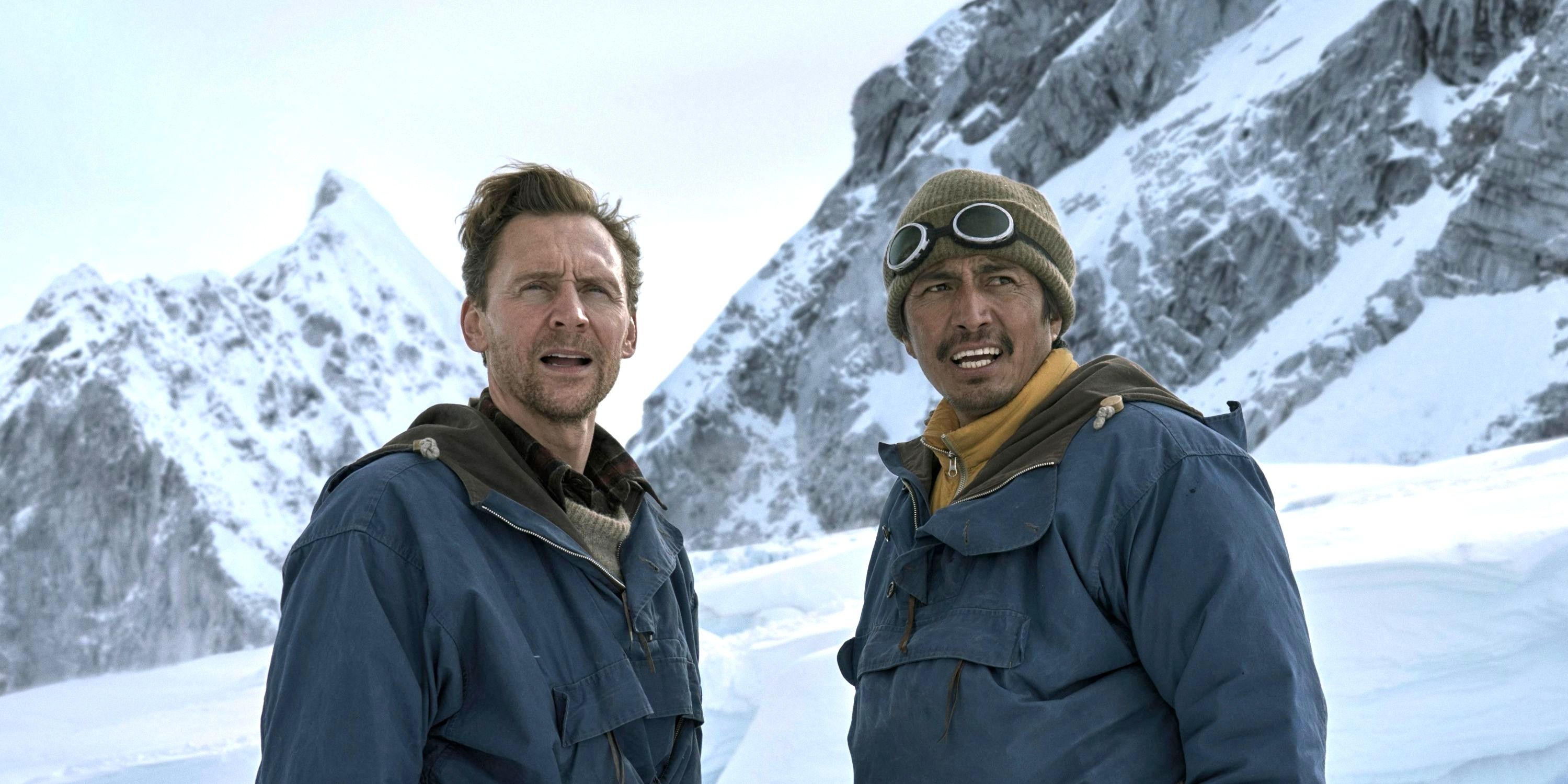
This film is based on a true story and chronicles the feat of one little-known pioneer. Many people might be unaware of Tenzing Norgay, the first recorded mountain climber to reach the summit of the tallest mountain in the world. Genden Phuntsok plays the Himalayan climber who collaborated with New Zealand mountaineer Edmund Hillary, played by Tom Hiddleston, for the historic climb. Tenzing has attracted some top-tier talent, including Willem Dafoe as Colonel Hunt and Caitríona Balfe as Jill Henderson.
Tenzing had to overcome a lot because, before he was allowed to climb, he served the British climbing team. With Henderson, they convince Colonel Hunt to add him to the team as a climber. He was able to climb the mountain by using a different philosophy from his Western counterparts, who viewed it as a conquest, whereas Tenzing viewed it as an entity. The climb becomes not only a challenge to push human limits but also a clash of ideas and backgrounds. Still, a mountain like Everest, or Chomolungma as it is traditionally called, has the unique ability to strip people down to the bare minimum and reveal what they’re made of.
Your answers have pointed to one Oscar Best Picture winner above all others. This is the film that was made for the way your mind works.
You are drawn to films that operate on multiple levels simultaneously — that begin in one genre and quietly, brilliantly migrate into another. Bong Joon-ho’s Parasite is a film about class, desire, and the architecture of inequality that manages to be darkly funny, deeply suspenseful, and genuinely shocking across a single extraordinary running time. Your instinct is for cinema that hides its true intentions until the moment it’s ready to reveal them. Parasite is exactly that — a film that rewards close attention and punishes assumptions, right up to its devastating final image.
You want it all — and this film gives you all of it. The Daniels’ Everything Everywhere All at Once is one of the most maximalist films ever made: action comedy, multiverse sci-fi, family drama, existential crisis, and a genuinely earned emotional core that sneaks up on you amid the chaos. You are someone who responds to ambition, who doesn’t want cinema to choose between being entertaining and being meaningful. This film refuses that choice entirely. It is overwhelming by design, and its overwhelming nature is precisely the point — because the feeling of being crushed by infinite possibility is exactly what it’s about.
You are drawn to cinema on a grand scale — films that understand history not as a backdrop but as a force, and that place their characters inside that force and watch what happens. Christopher Nolan’s Oppenheimer is a film about the terrifying gap between what we can do and what we should do, told with the full weight of one of the most consequential moments in human history behind it. You want your films to feel important without feeling self-important — to earn their ambition through sheer craft and the gravity of their subject. Oppenheimer does exactly that. It is enormous, complicated, and refuses easy comfort.
You are drawn to films that foreground their own construction — that make the how of the filmmaking part of the what it’s about. Alejandro González Iñárritu’s Birdman, shot to appear as a single continuous take, is cinema examining itself through the cracked mirror of a fading actor’s ego. You respond to formal daring, to the feeling that a film is doing something that probably shouldn’t be possible. Michael Keaton’s performance and Emmanuel Lubezki’s restless camera create something genuinely unlike anything else — a film that is simultaneously about creativity, relevance, self-destruction, and the impossibility of ever truly knowing if your work means anything at all.
You are drawn to cinema that trusts silence, that refuses to explain itself, and that treats dread as a form of meaning. The Coen Brothers’ No Country for Old Men is a film about the arrival of a new kind of evil — implacable, arbitrary, and utterly indifferent to the moral frameworks we use to make sense of the world. It is one of the most formally controlled films ever made, and its controlled restraint is what makes it so terrifying. You want your films to haunt you, not comfort you. You are not interested in resolution if resolution would be dishonest. No Country for Old Men is honest in a way that most cinema never dares to be.
After making history as the first recorded person to climb Mount Everest, Tenzing became a global celebrity and was named as Time’s 100 Most Influential People of the 21st Century. He went on to write a book that detailed his life. Tenzing was married three times and had seven children. His first wife, Dawa (Thienly Lhamo), was one of his greatest supporters, but she died. He had numerous grandchildren, including Tenzing Trainor (Liv and Maddie, Freeridge), an American actor and son of Norgay’s daughter Deki Tenzing. Norgay died in 1986 of a cerebral hemorrhage at the age of 71.
Tenzing, directed by Jennifer Peedom, will be available in select theaters on October 9 before streaming on Apple TV on October 16. Stay tuned to Collider for more updates.
Jennifer Peedom
Emile Sherman, Liz Watts, Iain Canning