Published Jul 4, 2026, 12:02 PM EDT
Cathal Gunning has been writing about movies, television, culture, and politics online and in print since 2017. He worked as a Senior Editor in Adbusters Media Foundation from 2018-2019 and wrote for WhatCulture in early 2020. He has been a Senior Features Writer for ScreenRant since 2020.
Sign in to your ScreenRant account
While it might feel like Stranger Things gave its lead characters plenty of character development, only one of the show’s original group of heroes underwent a meaningful transformation across the show’s five seasons. There is no doubt that the *Stranger Things *franchise is one of Netflix’s biggest hits ever, on par with One Piece and Wednesday. Beginning with 2016’s sleeper hit season 1, the show gradually grew in scope with each outing until 2025’s mammoth three-part fifth season.
With a series finale that became one of Netflix’s first worldwide theatrical releases and broke numerous viewership records for the streaming service, *Stranger Things *was undeniably hugely popular throughout its run. However, this doesn’t mean that the show was beyond criticism and, indeed, many worthwhile critiques of the series emerged from its own fan base. The broader, sillier tone of 2019’s season 3 was so heavily criticized that 2022’s season 4 saw the series do a tonal about-face, becoming darker than ever with the introduction of the main Stranger Things villain, Vecna.
Stranger Things season 5 saw the series lighten up again, taking on a tone less akin to a ‘80s horror movie and closer to an epic MCU blockbuster. This was met with divisive responses from the fan base, to say the least, with the infamous #ConformityGate conspiracy theory even suggesting that *Stranger Things *season 5’s finale was all a fantasy concocted by Vecna since it was too twee and tidy to fit the world of the show. While many criticisms of the finale were justified, a look back on the show as a whole proves its problems didn’t start in its fifth outing.
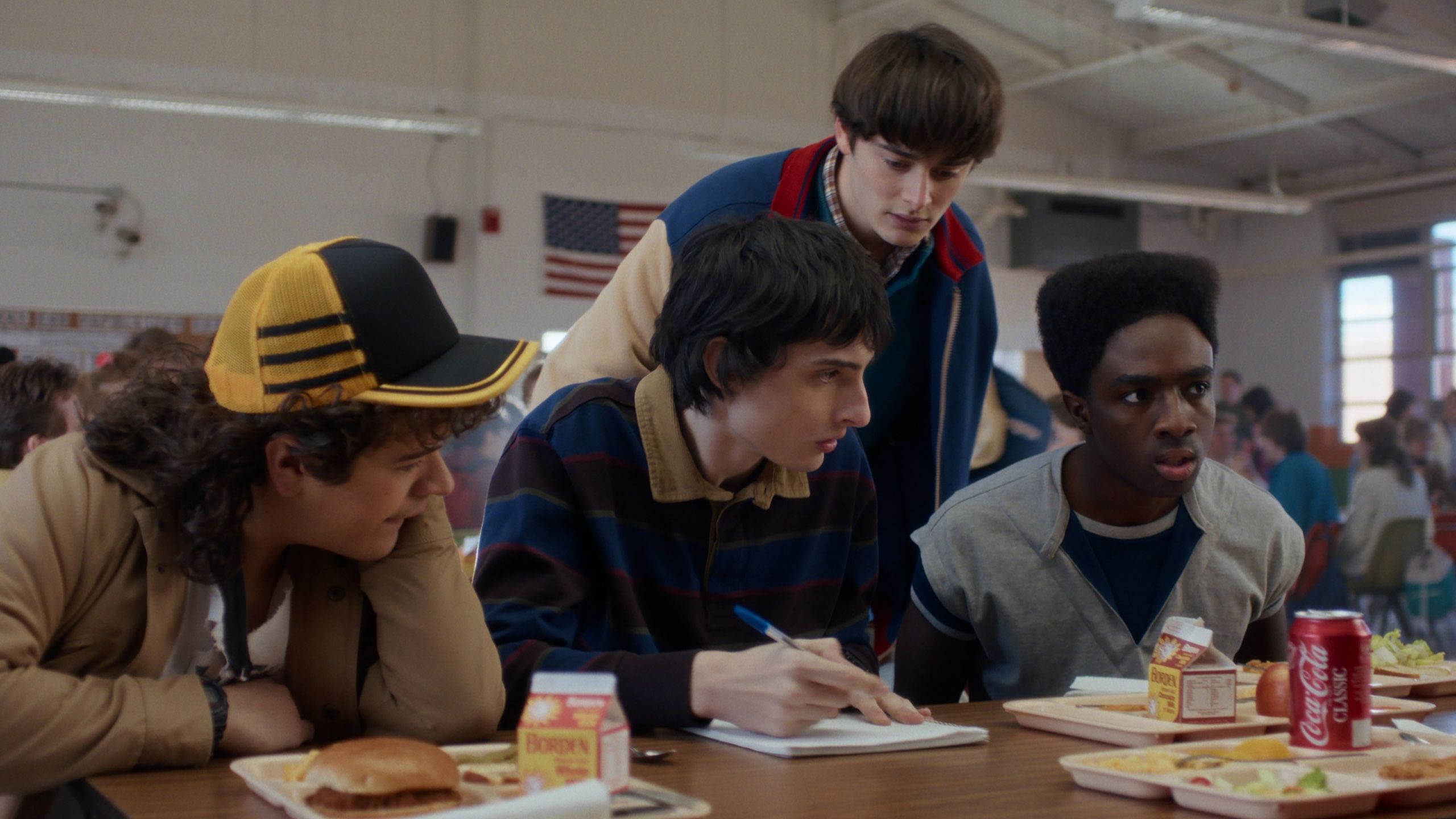
When viewers rewatch Stranger Things from the show’s first season, it becomes obvious that, of the original quartet of heroes, only one of the show’s main characters underwent a meaningful character arc during the events of the series. In season 1, Mike, Dustin, Lucas, and Will are introduced as the show’s heroes, with the loveable nerds playing a game of Dungeons and Dragons in the pilot’s opening scene.
Famously, the Stranger Things protagonist Will Byers goes missing in the next scene and remains absent for much of season 1’s action, trapped in the Upside-Down and evading a hungry Demogorgon. This means that Dustin, Lucas, and, in particular, Mike, get the lion’s share of screen time in season 1, with Will’s immediate struggle for survival overshadowing any meaningful character growth.
Mike’s relationship with El, which grows from a tentative friendship to a crush, to first love, blossoms throughout season 1. However, this arc forms the bulwark of the character’s growth throughout the entire series, as Finn Wolfhard’s character won’t go through much of an evolution again until the literal series finale. In season 2, Mike misses El and already knows he loves her. In season 3, he fails to appreciate El and then remembers he loves her, and in season 4, he misses El until he’s reunited with her once more.
While El might go through a lot of trauma during this time, Mike’s* Stranger Things *character journey remains fairly flat and stagnant. This drew a lot of criticism at the time, considering how poignant his season 1 story was, but looking at Dustin and Lucas’s storylines makes the problem much worse in retrospect. After all, Mike’s character at least has an arc in season 1.
While Lucas and Dustin’s characters fluctuate, with Lucas’s hardship over Max’s coma or Dustin’s grief over Eddie’s death, there is no real meaningful growth between the first and last episodes for them. Lucas is an incredibly loyal friend in season 1, which remains his defining characteristic in season 5. He struggles to admit Eleven into the tight-knit friend group as a young kid, and struggles with potentially losing Max as an older teen.
In both cases, the idea that Lucas is incredibly loyal is his only meaningful characteristic, and in both cases, this pays off, and he doesn’t change as a result. Similarly, Dustin’s disastrous season 5 storyline not only ignores his love interest, Suzie, wholesale, but also repeats the character’s already simplistic story. In season 1, he is an affable nerd who will defend the group’s potentially embarrassing love of geek culture more than his friends.
By season 5, Dustin has watched his friend and mentor die in his arms, faced death himself numerous times, and lost faith in every institution he once trusted. Despite this, in practice, he is just a less affable nerd who will now still defend the group’s potentially embarrassing love of geek culture more than his friends, to the extent that he gets brutally beaten up for defending *Dungeons and Dragons *and Eddie Munson from some local bullies (who are promptly forgotten forever by the series).
Ironically, of the original four main characters, it is only Will who undergoes a meaningful character shift throughout the show’s run, becoming far more confident and comfortable in his own skin in season 5. While this seems like a good thing, it should be noted that actor Noah Schnapp fails to sell this transformation in practice, and even a more talented thespian would have struggled with his sudden turnaround in the final season.
While* Stranger Things *season 5’s story tries to flip Will’s hardship at the hands of Vecna into a triumphant story of a teen overcoming adversity and embracing their identity, the fact that Will was an afterthought for much of seasons 3 and 4 means this falls flat. Steve, Eleven, Hopper, Joyce, Nancy, and even his brooding brother Jonathan all received more screen time and story focus, making this last-minute storyline feel like a transparent attempt to cram a five-season character arc into the show’s final five episodes.
The Stranger Things franchise faces a major challenge in 2026, as the Netflix show’s shrinking original timeline complicates its spinoff storytelling.
To even give Will this disappointing, underwritten transformation, Stranger Things had to give up on providing Lucas, Dustin, and Mike with any meaningful character changes of their own. The trio ends the series much the same as they started it, with Lucas remaining unassailably loyal, Dustin remaining a hardcore nerd who’ll die to defend his alternate interests, and Mike still the same sweet kid from Stranger Things season 1’s finale.
Stranger Things ](/db/tv-show/stranger-things/)
](/tag/mystery/)
](/tag/horror/)
Science Fiction
](/tag/sci-fi/)
2016 - 2025-00-00
Matt Duffer, Ross Duffer
Matt Duffer, Ross Duffer, Andrew Stanton, Frank Darabont, Nimród Antal, Uta Briesewitz
Kate Trefry, Jessie Nickson-Lopez, Jessica Mecklenburg, Alison Tatlock