Published Jul 9, 2026, 12:08 AM EDT
Jeremy has more than 2600 published articles on Collider to his name, and has been writing for the site since February 2022. He’s an omnivore when it comes to his movie-watching diet, so will gladly watch and write about almost anything, from old Godzilla films to gangster flicks to samurai movies to classic musicals to the French New Wave to the MCU… well, maybe not the Disney+ shows. His favorite directors include Martin Scorsese, Sergio Leone, Akira Kurosawa, Quentin Tarantino, Werner Herzog, John Woo, Bob Fosse, Fritz Lang, Guillermo del Toro, and Yoji Yamada. He’s also very proud of the fact that he’s seen every single Nicolas Cage movie released before 2022, even though doing so often felt like a tremendous waste of time. He’s plagued by the question of whether or not The Room is genuinely terrible or some kind of accidental masterpiece, and has been for more than 12 years (and a similar number of viewings). When he’s not writing lists - and the occasional feature article - for Collider, he also likes to upload film reviews to his Letterboxd profile (username: Jeremy Urquhart) and Instagram account. He has achieved his 2025 goal of reading all 13,467 novels written by Stephen King, and plans to spend the next year or two getting through the author’s 82,756 short stories and 105,433 novellas.
Sign in to your Collider account
Was the 1970s the best decade for music? Maybe. It’s not actually something that has to be answered here, necessarily, but it is relevant in the sense that it makes picking any selection of great songs from the decade in question potentially harder than it might be for other decades. There was a lot of rock, pop, soul, and yes, even some disco music, plus some other genres, and many of them arguably peaked in the 1970s.
The best thing to do would be not to undertake something like this in the first place. But there are bills to pay, and food to buy. The undertaking is happening. So, the second-best thing to do is pick songs that are largely well-regarded, but perhaps also personally favored by the person picking them. Being objective here is harder than usual, as there is an unfathomable number of songs that could be picked here. But these ones are all great. They’re among the best songs of the 1970s, and to keep things varied, there’s a limit of one song per artist.
“Bridge over Troubled Water” was the title track for what ended up being the final studio album by Simon & Garfunkel. It’s the duo’s only one of the 1970s, though in the case of “Bridge over Troubled Water,” the song, it was recorded in 1969, and then released within the first few weeks of the new decade. It’s a grand ballad, and has an incredible crescendo that builds over almost five minutes.
It’s Simon & Garfunkel’s peak, which is saying a lot, considering how many memorable songs the duo recorded throughout their relatively short partnership. “Bridge over Troubled Water” is simple with what it goes for lyrically, but it’s all in the execution that makes it genuinely work. And, credit to Art Garfunkel, whose post-Simon & Garfunkel work does sometimes get overshadowed by Paul Simon’s, but Garfunkel’s lead vocals in this song are incredible.
This is going to be the closest to an out there pick, in this whole ranking, but “Ambulance Blues” really does feel like it might be Neil Young’s single best song, and he had an especially great run throughout the 1970s, so he’s worthy of inclusion here. This track concludes the heavy-going album On the Beach, and spans almost nine minutes, doing for this album what Bob Dylan’s “Desolation Row” did for Highway 61 Revisited.
Or, for another Dylan comparison, it’s to On the Beach what “Sad Eyed Lady of the Lowlands” is to Blonde on Blonde. Having a downbeat epic at the close of a folk rock album just feels right. The melancholy, musically and lyrically, in “Ambulance Blues” is hard to put into words, but you know it when you hear and feel it. It’s the ideal showcase for Young’s abilities as a singer-songwriter.
Led Zeppelin’s fourth album is the band’s best, and part of that comes down to it being the album with “Stairway to Heaven” on it. If you’ve only ever heard a single Led Zeppelin song, it was probably this one. And it is another long song, so at least if you’re in that camp, you’ve maybe heard the equivalent of two or three Led Zeppelin songs through the act of listening to “Stairway to Heaven.”
It’s also a great marriage of all the sounds and styles Led Zeppelin had explored throughout their first few albums.
It’s another slow build of a song, a bit like “Bridge over Troubled Water,” and that’s a big factor in no one really minding the fact that it goes on for about eight minutes. It’s also a great marriage of all the sounds and styles Led Zeppelin had explored throughout their first few albums, since you get the slower, almost folkier sound of the band on display in the first half of the song, and then things sound more and more like hard rock as the second half of the song progresses.
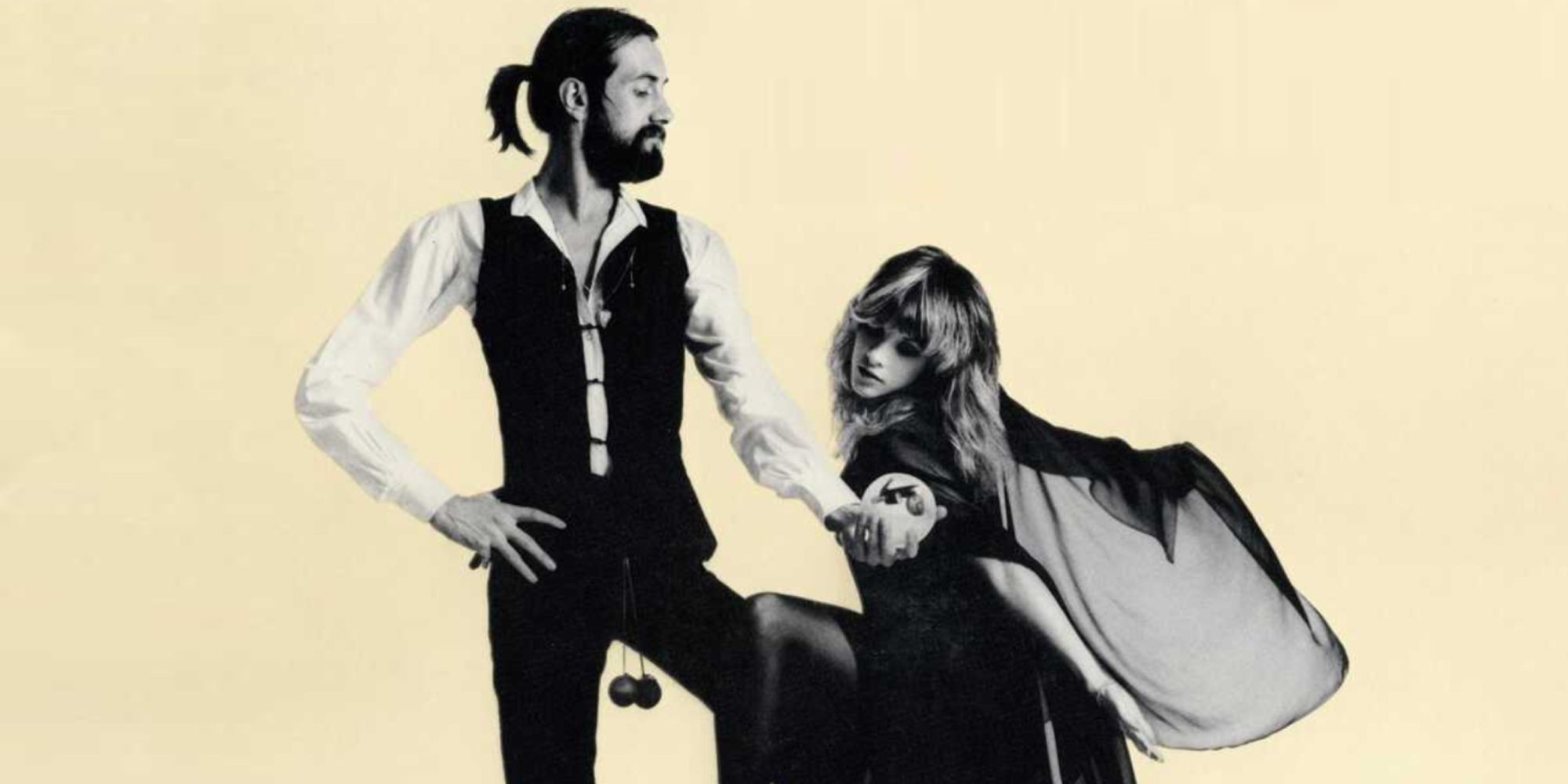
There are no misses to be found on Rumours, and so it’s understandably an album with an enduring legacy that showcases Fleetwood Mac at its best. Picking a highlight from an album packed with highlights is hard, but why not “Dreams?” This is one of the mellower songs on the album, and it’s also got lyrics that most impactfully summarize what the band members were (somewhat notoriously) going through at the time.
“Dreams” is easy to listen to, and kind of relaxing, if you’re not listening too much to the lyrics, but then that relative calmness gets a whole lot sadder, once you do. Other Fleetwood Mac songs might feel a bit more high-energy or rock-oriented, sure, but “Dreams” is still one of the band’s very best tracks because of how much it nails what it’s going for, and because what it’s going for is quite distinct, even for a bittersweet album like Rumours.
One of the most energetic songs of not just the 1970s, but maybe all time, “Move On Up” is also as good as feel-good songs get. It’s also best experienced in its original/extended form, on Curtis Mayfield’s debut album, called Curtis, because while the single version still has a good deal of what makes the song so great, the version that goes for nearly nine minutes is more special.
The lyrics and uplifting message of the song are retained, when it gets shortened, but the lengthy instrumental outro is energizing and uplifting in a different sort of way. Also, an honorable mention should go out to another 1971 soul song that almost made the cut: Marvin Gaye’s “What’s Going On.” It moved on out, to make way for “Move On Up.” And “Move On Up” might not be as famous, but it’s arguably even better.
Bruce Springsteen called his autobiography Born to Run, which does help support the idea that it’s his defining song. Well, Born to Run is also the name of his third studio album, and that album overall does a great job at encapsulating Springsteen, as an artist, and the same can be said of its title track, albeit more directly. It summarizes the youthful energy Bruce Springsteen had early on in just four and a half minutes.
In that sense, it’s a good song to name the album after, and then a good title to also use for an autobiography. Everything’s here, and sure, Springsteen would explore different sounds later on in his career, as he matured and experimented a bit more, but the Springsteen of the 1970s – and maybe into the early 1980s – is the one you hear at his Springsteen-iest on “Born to Run,” his (potentially) forever definitive song.
With “Heart of Glass,” Blondie just dove right into disco, instead of, like, merely flirting with it or something. It has a bit of a pop/rock sound, too, or maybe it’s new wave, but whatever it is, it sounds amazing. You’d think it would sound a bit dated alongside being kind of amazing, but this really isn’t a guilty pleasure or anything. Instead, it’s just a pleasure (to listen to).
It’s the highlight of Parallel Lines which, as an album, is the highlight of Blondie’s entire discography. Musically, it’s unreal how well “Heart of Glass” works, and then it’s got some very sharp lyrics, too. It’s the full package, and it almost makes you wish Blondie had done an entire album with this sort of disco sound, since the band just got it that right. But, then again, Parallel Lines wouldn’t be quite as special as it is if it hadn’t been so wonderfully eclectic.
Bands don’t get much more short-lived than Derek and the Dominos, since there was a grand total of one Derek and the Dominos album: Layla and Other Assorted Love Songs. And, yes, “Layla” was the highlight of that album. The other assorted love songs are worthy of attention, because it is a pretty great album, but “Layla” is next-level, and is also more about desperation – and maybe obsession – than it is love.
Like “Move on Up,” “Layla” would still work as a passionate pop song if you just listened to the first half, but the instrumental second half is just as important, emotionally speaking, even if the “narrative” as far as the lyrics go is contained within the first half. At the risk of sounding corny, though, the guitar and piano part in the second half does continue telling a story, just without words. You do really feel it, though (again, sorry about the potential corniness). Be a good fella and listen to this one, why don’t you?
Oh no, a second disco song has intruded onto this ranking. But it’s “Dancing Queen” by ABBA, and, like, come on. You can’t really hate “Dancing Queen” by ABBA. This is one of those precious few pop songs that’s so good, even if you hear it hundreds of times without necessarily going out of your way to listen to it, it’s unlikely to ever get old. Plenty of other great songs can eventually get tiresome, but not “Dancing Queen.”
It’s another instance of a band’s best song appearing on what’s probably their best album: in this case, Arrival. The only times “Dancing Queen” might be kind of annoying is if you’re exposed to too many of the covers. There are so many covers. They’re all inferior, and they’re all likely to make you wish you were just listening to the ABBA version instead. And that ABBA version really is flawless. Dread it. Run from it. Try to resist it. “Dancing Queen” arrives all the same.
There was an argument to be made that “Born to Run” summed up a good deal of Bruce Springsteen’s career and appeal in one song, but it’s harder to say that about “Heroes” and David Bowie, even if it is probably the legendary artist’s very best song. It comes down to Bowie having too many eras, styles, sounds, and personas. “Heroes” can, at most, be cited as the pinnacle of his Berlin Trilogy (Low, Heroes, and then Lodger, all released in the late 1970s).
Maybe the better comparison is that it’s Bowie’s “Stairway to Heaven,” but even then, that song captures and summarizes a lot of Led Zeppelin. “Heroes” is just a very small piece of Bowie’s discography, and maybe even just a small piece of what he was capable of. Still, what a piece. And what a song. What else needs to – or can – be said? “Heroes” is “Heroes.”
Moonage Daydream ](/tag/movie/moonage-daydream/)