Shealyn Scott is a Senior Writer at Screen Rant. She has been writing for the site since 2024, focused on network, reality, streaming, and classic television.
A creative writer, journalist, and lover of the written word in all its forms, Shealyn enjoys deconstructing scenes from her favorite shows, using context clues and historical precedent to predict major plot points (which, due to her successful track record, has sparked rumors of clairvoyance).
As an award-winning student journalist, Shealyn spent her college years advocating for the humanities while studying English Literature. Her love of storytelling propelled her to expand her degree with minors in Writing and History, believing life to be a mere collection of stories that can be framed in as many ways as a movie scene.
As a Senior member of the TV Team, Shealyn treats the series she covers like books, analyzing every line, camera angle, and lighting choice. Thankfully, her personal mission statement lines up perfectly with Screen Rant: every creative work deserves just as much thought from the viewer as it received from its creator.
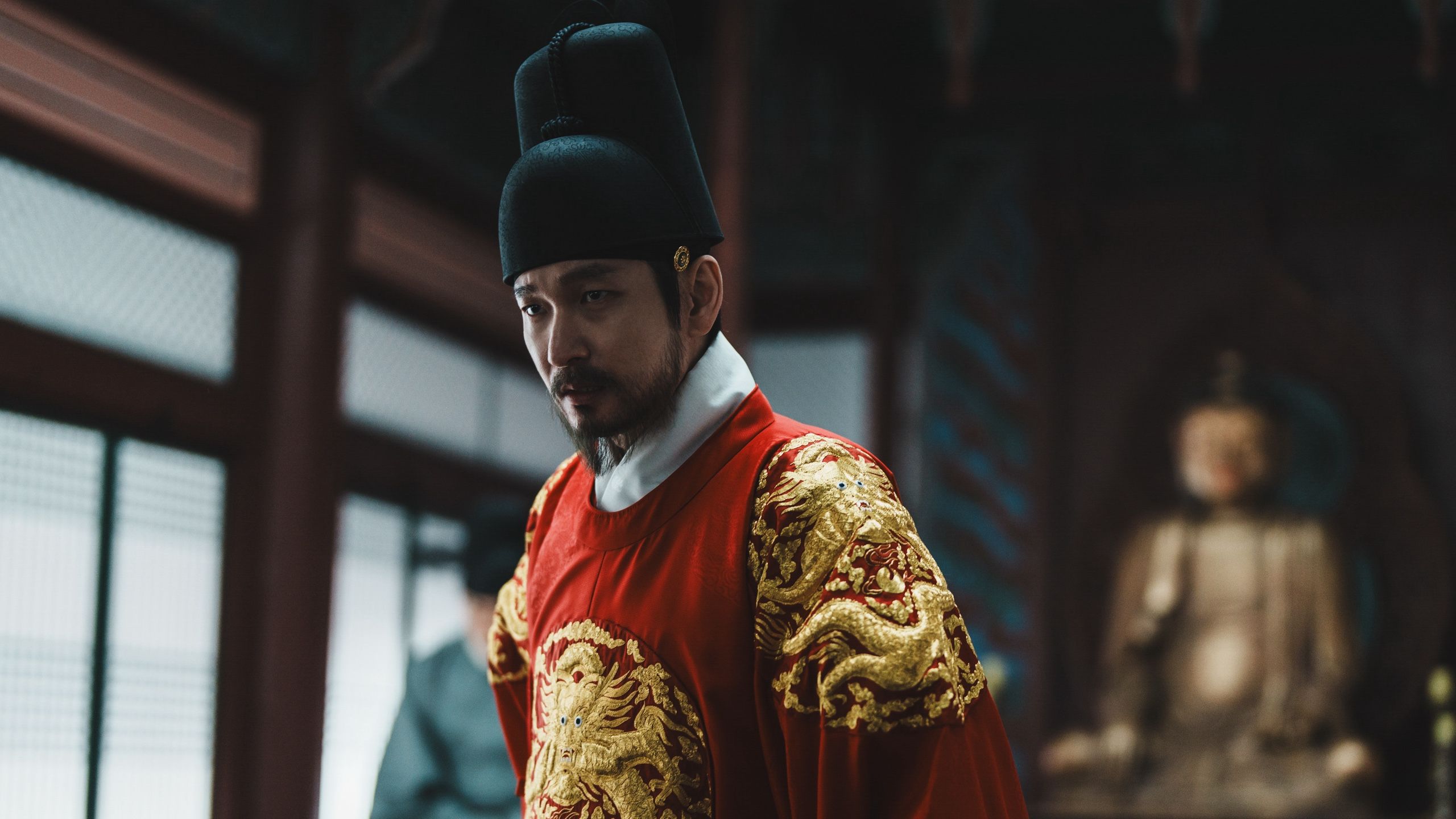
Out of the many K-dramas promoted by Netflix in early 2026, viewers may have had the highest expectations for The East Palace— and the first four episodes have absolutely delivered. The moment Netflix unveiled its 2026 K-drama lineup, fans began looking forward to The East Palace, be it for the promising period setting, the star-studded cast, or the captivating synopsis: a mighty monarch seeking out a spirit slayer to defeat a generational curse, aided by a mysterious lady of the court with inexplicable powers of her own.
Of course, arguably the most exciting aspect of The East Palace is the fact that it marks the long-awaited K-drama comeback of Nam Joo-hyuk (Twenty-Five Twenty-One, Weightlifting Fairy Kim Bok-joo, Start-Up). Netflix’s 2026 supernatural drama is the first time the beloved actor will grace the small screen since 2023, and his portrayal of protagonist Gu-cheon is certainly worth the wait.
Don’t be fooled, though:* The East Palace* is far from a one-man show. As the long-buried secrets of the eponymous palace begin unearthing themselves one by one, Gu-cheon finds himself with an invaluable ally: court lady Saeng-gang (played by Roh Yoon-seo of Crash Course in Romance and *20th Century Girl *acclaim). Besides its winning cast, however, the true allure of *The East Palace *is its delightfully serpentine storytelling.
Immediately, The East Palace positions Gu-cheon and Saeng-gang as narrative foils, both in personality and in expertise. The brusque, asocial Gu-cheon is drained from a lifetime of seeing spirits and fighting them in another realm— the World of Gwi— whereas Saeng-gang bears the cross of hearing and speaking to spirits, an ability that left her ostracized and afraid of her own power at a young age. In some ways, the two characters stand in fundamental opposition due to their contrasting life experiences. In other shades of grey, they understand each other on an innate, immensely vulnerable level.
K-drama fans with a penchant for romance shouldn’t rush in with the assumption of an imminent love story, but Gu-cheon and Saeng-gang do form a wildly endearing pair as the former is forced to teach the latter about the spectral world. Furthermore, although the series does have its own bevy of original monsters, the dark fantasy elements of The East Palace are based on real-life Korean folklore— namely, the tales of gwisin (ghosts with unfinished business).
As Gu-cheon explains to Saeng-gang in sporadic bursts that naturally flow into conversation, there are many unique sub-categories of spirits they may encounter. There are classic gwi-mae, characterized simply by their “sinister” life force. Similarly, won-gwi are particularly resentful ghosts. There are even spirits called ggeomeoksali, which are said to drain living things of their “Yang” energy. Gu-cheon, who lacks Yang by nature, is more wary of ggeomeoksali than any other terrifying spirit— which makes it all the more humorous when he encounters one during his mission.
The different classifications of ghosts are interesting enough on their own, but *The East Palace *shines when it comes to creature designs. No two spirits look the same, and the mix of incredible makeup and well-done special effects paints a vivid picture that is horrific in the best possible way. Eerie sets, refreshingly emotive acting, and first-class cinematography help bring the genre-bending series to life, imbuing each fantasy battle sequence and tense investigative aside with palpable moments of sheer terror.
Countless K-drama fans currently view Nam Joo-hyuk as one of the best Korean male leads of the century, but he brings an austerity to Gu-cheon that expands his already enthralling range as an actor. The character’s blasé approach to life does leave room for some of Nam’s impeccable comedic timing, but there’s a deep sadness to Gu-cheon that draws the audience in with a vice grip, such that it’s easy to forget the actor has played numerous iconic heartthrobs.
Nevertheless, as fantastic as Nam Joo-hyuk is, the real standout of The East Palace is Roh Yoon-seo. The actress has had very few opportunities to demonstrate her range, as many of her biggest roles orbit the same generic archetype of a sympathetic high-school student. In stark contrast, Roh is borderline unrecognizable as Saeng-gang. Of course, she visually appears the same, but Saeng-gang is a challenging change of pace that could have easily failed to land. Thankfully, Roh holds her own alongside Nam and makes phenomenal choices that bring the female lead to life in brilliant clarity.
Just as praiseworthy are the small ensemble of royals that fuel The East Palace’s political subplot. Cho Seung-woo’s King oscillates between kindness and cutthroat grit, two equally unnerving sides of the same coin. Whether he’s threatening an enemy or plotting to protect his power, the King’s actions constantly prove that ascending the throne requires a killer instinct. Likewise, Jang Young-nam is a force of nature as the Queen Dowager. She commands the viewer’s attention whenever she’s on-screen, wielding her rank with such quiet ferocity that her mere gaze feels akin to Medusa.
Nearly everything in The East Palace’s bewitching story comes in pairs. The King is constantly at odds with the Queen Dowager, the spirit realm is a hellish, uncanny mirror of the real world, Saeng-gang’s abundant Yang makes up for Gu-cheon’s accumulated Yin, etc. Whether in harmony or in deadly discord, there is always balance. Beyond the narrative equilibrium, though, the K-drama’s pacing is remarkably regulated.
Far too often, comparable K-dramas either fail to build a steady foundation or rush into their main plots, robbing the viewer of any chance at true investment. Conversely, The East Palace hits the ground running with its world-building, and it blissfully wastes no time setting up its major conflicts— but it still lets things simmer. By the end of the first episode, you understand the stakes. By the end of the second, you’re on the edge of your seat, anxiously awaiting the next revelation or game-changing twist.
The East Palace doesn’t compel you to keep pressing play; it hypnotizes you with such gripping drama, you binge the first four episodes in a daze…
There are plenty of K-dramas to watch in a weekend for an easy, uncomplicated viewing experience. On the contrary, The East Palace doesn’t compel you to keep pressing play; it hypnotizes you with such gripping drama, you binge the first four episodes in a daze. Even at the halfway point, the K-drama shows no signs of slowing down. Rather, The East Palace further ups the ante with a realistic but nonetheless consequential change-up.
Admittedly, the show isn’t perfect. Some music choices feel out-of-place and distractingly modern, and some fight scenes veer too dark to appreciate the details. Yet, even that is a credit to the K-drama, as the details are what draw the viewer in, from the gorgeous costumes to the actor’s micro-expressions to the subtle clues hiding in plain sight. All in all, the first half of The East Palace is a stupendous bout of supernatural fun, but no viewer will be fully content until they’ve devoured every second of Netflix’s newest K-drama.