Published Sep 1, 2026, 7:59 PM EDT
A trilogy gets something a single movie never can. Time. We remember characters before they knew what was coming, then watch years, losses, relationships, and entire civilizations accumulate around them. That is why a great third film can make the first one feel different without changing a frame. You suddenly understand what those early choices were building toward.
The six trilogies here use that privilege brilliantly. Some were conceived as connected artistic projects, while others discovered their larger meaning as the years passed. Their genres barely overlap, yet each leaves behind the same satisfying feeling of having traveled somewhere substantial with these characters. Three films went by. A whole life seems to have happened.
Krzysztof Kieślowski’s Three Colours trilogy takes the ideals associated with the French flag and turns them into intimate human dramas. Blue explores liberty through Julie (Juliette Binoche), a woman trying to detach herself from life after losing her husband and daughter. White approaches equality through a bitter relationship between Karol Karol (Zbigniew Zamachowski) and Dominique Vidal (Julie Delpy). Red reaches fraternity through Valentine Dussaut (Irène Jacob)’s unexpected connection with an elderly retired judge, Joseph Kern (Jean-Louis Trintignant), who secretly listens to his neighbors’ phone calls. The films share a moral universe rather than one continuing plot, and that freedom lets each chapter develop its own emotional temperature.
Their connection becomes more rewarding the closer you look. Colors recur with purpose, strangers briefly cross paths, coincidences start feeling meaningful, and private decisions quietly echo beyond the people making them. Juliette Binoche’s grief in Blue has almost nowhere to hide, while Red gradually opens toward human connection after spending so much time around isolation and judgment. Watching all three together reveals a trilogy interested in how impossible complete independence really is. Start with Blue and the project feels elegant. Reach Red and it feels profoundly humane.
The Cornetto Trilogy is connected by creative DNA rather than characters. Shaun of the Dead drops two emotionally stalled friends, Shaun (Simon Pegg) and Ed (Nick Frost), into a zombie outbreak. Hot Fuzz sends an overachieving London police officer, Nicholas Angel (Simon Pegg), to a suspiciously perfect English village. The World’s End reunites old friends for a pub crawl that collides with something much stranger. Edgar Wright, Simon Pegg, and their recurring collaborators use different genres each time, while Cornetto ice creams, friendship, arrested development, and spectacularly bad coping mechanisms keep linking the films.
The clever references are part of the pleasure, especially once ordinary dialogue starts paying off much later in ways that reward repeat viewing. Yet the trilogy lasts because the jokes sit on genuine relationships. Shaun has to grow up before adulthood passes him entirely. Nicholas Angel has to learn that competence without connection can become its own limitation. Gary King (Simon Pegg) is harder to laugh at once his obsession with recreating youth reveals how badly he needs that night to mean something. The genre mechanics are immaculate, and the emotional progression sneaks up on you. Come for zombies, gunfights, and pub signs. Stay because these idiots eventually start feeling familiar.
Before Sunrise begins with Jesse Wallace (Ethan Hawke) and Céline (Julie Delpy) meeting on a train and deciding to spend one night walking through Vienna together. Nine years later, Before Sunset finds them in Paris with only a short window to understand what that night became in their memories. Another nine years pass before Before Midnight, where romance has become a shared life containing children, resentment, affection, compromise, and all the ordinary pressure that youthful chemistry never had to solve.
Richard Linklater developed the trilogy with Ethan Hawke and Julie Delpy in a way that allows real time to become part of the storytelling. Their faces change. Their assumptions change. The conversations get less hypothetical because adulthood has supplied actual consequences. Jesse and Céline can discuss books, sex, family, ambition, and mortality with the intimacy of people who know where the other person hides emotionally. That is why revisiting Vienna after seeing the later films can hurt in a completely different way. Very few trilogies let eighteen years of life become part of the performance. Watch these three across a weekend and you will feel every one of them.
Bruce Wayne (Christian Bale) begins The Dark Knight Trilogy believing fear can be turned against the criminals who rule Gotham. Batman Begins builds the philosophy and the symbol. The Dark Knight tests both against the Joker (Heath Ledger), whose attacks are designed to corrupt the moral assumptions holding Gotham together. The Dark Knight Rises then deals with a Bruce who has already spent years absorbing the physical and emotional cost of becoming Batman. This is superhero cinema structured around consequences rather than an endless reset button. And the first time Bruce shows up in the third installment? The jet scene? Brilliance.
Christopher Nolan and his collaborators gave each chapter a distinct dramatic problem while letting Bruce’s decisions carry forward. Rachel Dawes (Katie Holmes and Maggie Gyllenhaal)’s death changes him. Harvey Dent (Aaron Eckhart)’s reputation becomes a political lie Gotham eventually has to live inside. Alfred Pennyworth (Michael Caine)’s devotion reaches a limit once protecting Bruce begins to mean watching him destroy himself. The Joker remains the trilogy’s cultural earthquake, yet reducing these films to one extraordinary villain misses the larger construction. Bruce spends three movies trying to determine whether Batman should be a man, a symbol, or something Gotham can eventually survive without. That complete argument is why the trilogy still towers over most superhero franchises.
The scores below reveal your true character. Your highest number is your match. Even a tie tells a story — the Fellowship was never made of simple people.
You carry something heavy — and you carry it alone, even when you don’t have to. You were not born for greatness, and that is precisely why greatness chose you. Your courage is not the roaring, sword-swinging kind; it is quiet, stubborn, and terrifying in its refusal to quit. The Ring weighs on you more than anyone can see, and still you walk toward the fire. That is not weakness. That is the rarest kind of strength there is.
You are, without question, the best of them. Not the most powerful, not the most celebrated — but the most essential. Your loyalty is not a trait; it is a force of nature. You would carry the person you love up the slopes of Mount Doom if it came to that, and we both know you’d do it without being asked. The world needs more people like you, and the world is lucky it has even one.
You were born to lead, and you have spent years running from it. The crown is yours by right, but you know better than anyone that right means nothing without the will and the worthiness to back it up. You are tempered by loss, shaped by long roads, and defined by a code of honour you hold to even when no one is watching. When you finally step forward, the world shifts. Because it was always waiting for you.
You have seen more than you let on, and you say less than you know — which is exactly as it should be. You are a catalyst: you do not fight the battles yourself, you ignite the people who can. Your wisdom comes not from books but from an age of watching what happens when it is ignored. You arrive precisely when you mean to, and your presence alone changes what is possible. A wizard is never late.
Graceful, perceptive, and almost preternaturally calm under pressure — you see things others miss and act before others react. You do not need to make a scene to be remarkable; your presence speaks for itself. You are loyal to those you choose to stand beside, and that choice is not made lightly. You have lived long enough to know that the most beautiful things in this world are also the most fragile, and that is why you fight to protect them.
You are loud, proud, and absolutely formidable — and beneath all of that is one of the most fiercely loyal hearts in Middle-earth. You don’t do anything by half measures. Your friendships are forged like iron, your grudges run as deep as mines, and your courage in battle is the kind that makes legends. You came into this fellowship suspicious of everyone and ended it willing to die for an elf. That is not a small thing. That is everything.
You think in centuries and act in absolutes. Order, dominion, control — not because you are cruel by nature, but because you have decided that the world left to itself always falls apart, and you are the only one with the vision and the will to hold it together. You were not always this. Something was lost, or taken, or betrayed, and the version of you that stands now is the answer to that wound. The tragedy is that you’re not entirely wrong — just entirely too far gone to course-correct.
You are a study in contradiction — pitiable and dangerous, cunning and broken, capable of both cruelty and something that once resembled love. You are defined by loss: of innocence, of self, of the one thing that gave your existence meaning. Two voices war inside you constantly, and the tragedy is that the better one sometimes wins, just not often enough, and never at the right moment. You are a warning, yes — but also a mirror. We are all a little Gollum, given the right ring and enough time.
The Caesar Trilogy begins with one genetically enhanced chimpanzee being raised inside a human family and ends after the balance between two species has changed forever. Rise of the Planet of the Apes gives Caesar (Andy Serkis) intelligence, language, and his first understanding of human cruelty. Dawn finds him leading a growing ape society that is trying to coexist with human survivors. War places grief and vengeance directly against the principles he spent years building.
Caesar’s development is astonishingly continuous. His speech becomes more sophisticated as his society grows, his relationships acquire history, and earlier wounds keep influencing later decisions. Koba (Toby Kebbell) is especially important because his hatred of humans comes from abuse that Caesar understands without being willing to let it dictate the future. By War, leadership looks exhausting rather than glamorous. Andy Serkis’s motion-capture work anchors that evolution, while the visual effects became convincing enough that technical admiration quickly gives way to emotional investment. Plenty of franchises build bigger worlds with each sequel. This trilogy **makes one character feel bigger without losing the frightened young ape **who started it all.
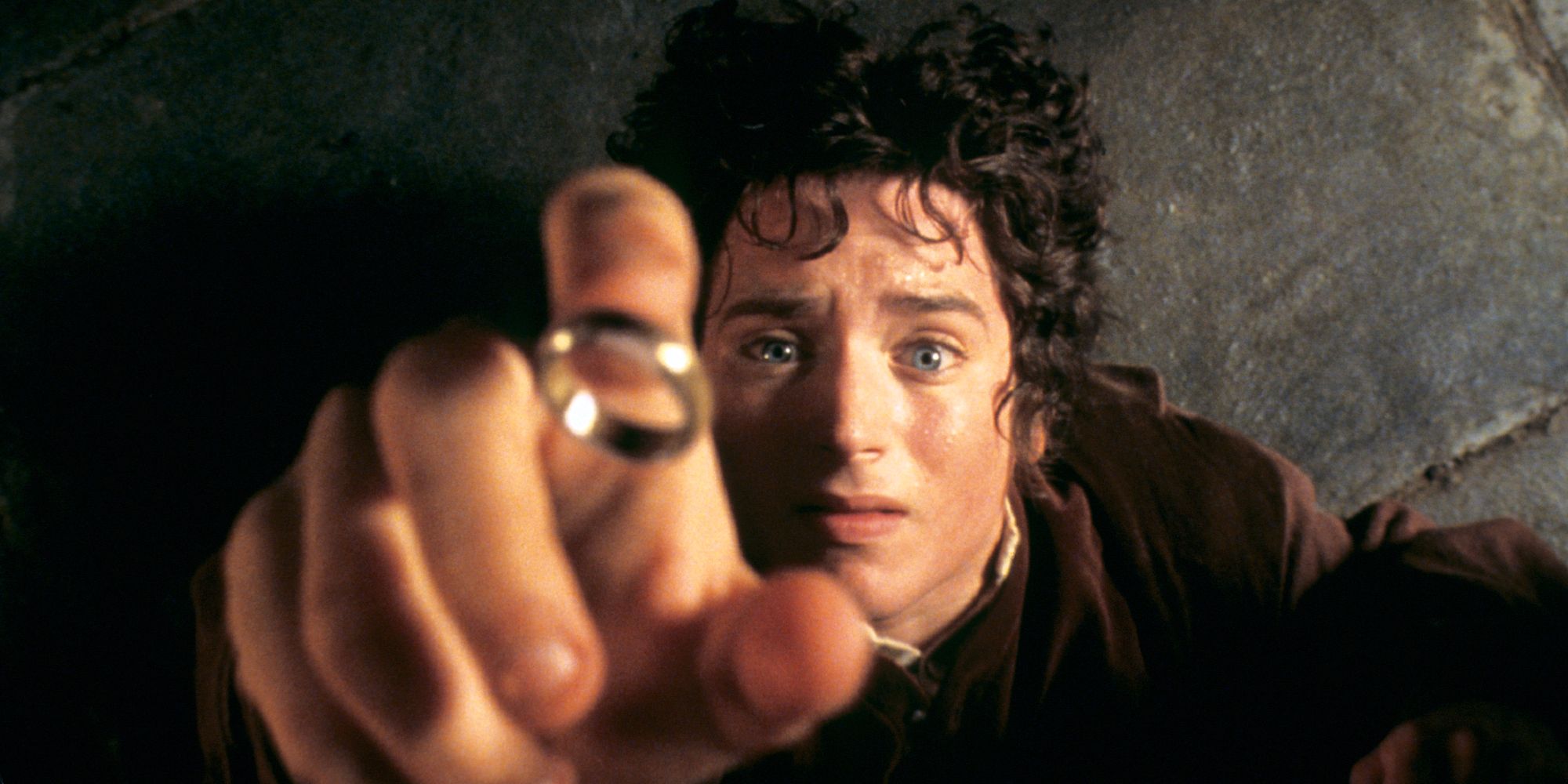
A hobbit inherits a ring that could return ultimate power to Sauron, and the attempt to destroy it pulls nearly every corner of Middle-earth into the same struggle. The Fellowship of the Ring makes that world feel ancient before the journey has properly begun. The Two Towers separates the Fellowship and shows the war expanding beyond one quest. The Return of the King brings those strands together while Frodo Baggins (Elijah Wood) and Samwise Gamgee (Sean Astin) continue toward Mount Doom with almost none of the grandeur surrounding the battles elsewhere.
Peter Jackson, Fran Walsh, and Philippa Boyens adapted Tolkien across three films produced as one enormous undertaking, which gives the trilogy a continuity that still feels extraordinary. Aragorn (Viggo Mortensen)’s reluctance grows into responsibility. Théoden (Bernard Hill) moves from despair toward courage. Gollum (Andy Serkis) turns the burden of the Ring into a living warning of what Frodo may become. Sam’s loyalty keeps the smallest part of the story emotionally connected to the fate of an entire world. The battles remain spectacular, but friendship is what gives them meaning. By the time the hobbits return to the Shire, they have saved everything and still cannot simply become the people who left home. That final emotional truth makes the entire journey worth taking again.
The Lord of the Rings: The Return of the King ](/tag/the-lord-of-the-rings-the-return-of-the-king/)
](/tag/adventure/)
](/tag/fantasy/)
](/tag/action/)